
 简体中文
简体中文 English
 Русский
A food processing plant replaced the same 2/2-way solenoid valve on a steam injection line four times in one season. The symptom was identical every time: the coil shorted, the brass body discolored, and the seal still looked new. This was not a bad batch. It was a standard valve, rated for ambient service, working against 160°C steam.
High temperature solenoid valve failures follow a predictable pattern. Match the body material, coil insulation class, and seal compound to the real media temperature, and the valve will run for years of continuous duty. Miss one of the three, and replacement costs overtake the purchase price within months.
Content
- 1 What Is a High Temperature Solenoid Valve?
- 2 How Heat Destroys a Solenoid Valve, Step by Step
- 3 Matching Body Material and Seals to Your Media Temperature
- 4 Applications Where Real Temperatures Are Higher Than Buyers Expect
- 5 Brass or Stainless Steel? A Radar Comparison
- 6 A Practical High Temperature Solenoid Valve Selection Checklist
- 7 Where the Heat Goes: A High Temperature Solenoid Valve Cutaway
- 8 Frequently Asked Questions About High Temp Solenoid Valves
- 8.0.1 What is the maximum temperature for a solenoid valve?
- 8.0.2 Can a solenoid valve be used on steam?
- 8.0.3 What is the difference between Class B and Class H coils?
- 8.0.4 Why does my solenoid valve fail even though my media is only 120°C?
- 8.0.5 Which is better for high temperature service, brass or stainless steel?
- 8.0.6 How can I extend the service life of a high temp solenoid valve?
What Is a High Temperature Solenoid Valve?
A high temperature solenoid valve is a 2/2-way valve designed to keep switching reliably when the media or the surrounding ambient temperature exceeds roughly 100°C. That threshold is important because it is the ceiling for standard plastic valve bodies and for the cheapest class of coil insulation.
Three thermal ratings decide whether a valve can honestly carry the high temperature label:
- Coil insulation class: Class B (130°C), Class F (155°C), Class H (180°C), Class C (above 200°C).
- Seal compound: NBR (up to 100°C), EPDM (up to 150°C), FKM (up to 200°C), PTFE (up to 260°C).
- Body material: brass, stainless steel 304/316, cast aluminum, or engineering plastic.
Many catalog pages call a valve high temperature because the body is brass rather than plastic. That is a starting point, not a complete answer. The real limit almost always comes from the coil insulation and the seal.
How Heat Destroys a Solenoid Valve, Step by Step
Coil insulation fails first. Electrical insulation engineers use the Montsinger rule: insulation life halves for every 10°C rise above its rated temperature. A Class B coil rated for 130°C running continuously at 170°C loses roughly 90% of its design life. The heat does not need to come from the coil's own current draw, because hot media conducts through the body and armature tube into the coil area.
Service life retention of a Class B coil as working temperature rises.
Seals fail second. When media is hot, the heat conducts through the body and raises the temperature of the dynamic seal. NBR that is perfectly fine at 60°C becomes hard and brittle at 120°C, which shows up as external leakage at the bonnet.
The Usual Order of Failure
Matching Body Material and Seals to Your Media Temperature
Choose the body material before you negotiate price. The body carries the pressure, spreads the heat, and governs corrosion resistance. For hot water and low-pressure steam, a brass body with FKM seals is the proven workhorse. For saturated steam above 150°C, or for aggressive media, a stainless steel body is the safer choice.
| Material | Max continuous media temperature | Typical pressure range | Best suited for |
|---|---|---|---|
| Brass | 150°C with FKM or PTFE | 0.5–1.6 MPa | Hot water, hot oil, low-pressure steam |
| Stainless steel 304 | 200°C with FKM or PTFE | 0.5–2.5 MPa | Saturated steam, aggressive fluids |
| Cast aluminum | 120°C | 0.1–1.0 MPa | Pulse cleaning, hot gas, air |
| Engineering plastic | 60–80°C | 0.1–0.8 MPa | Cool water, air, neutral media |
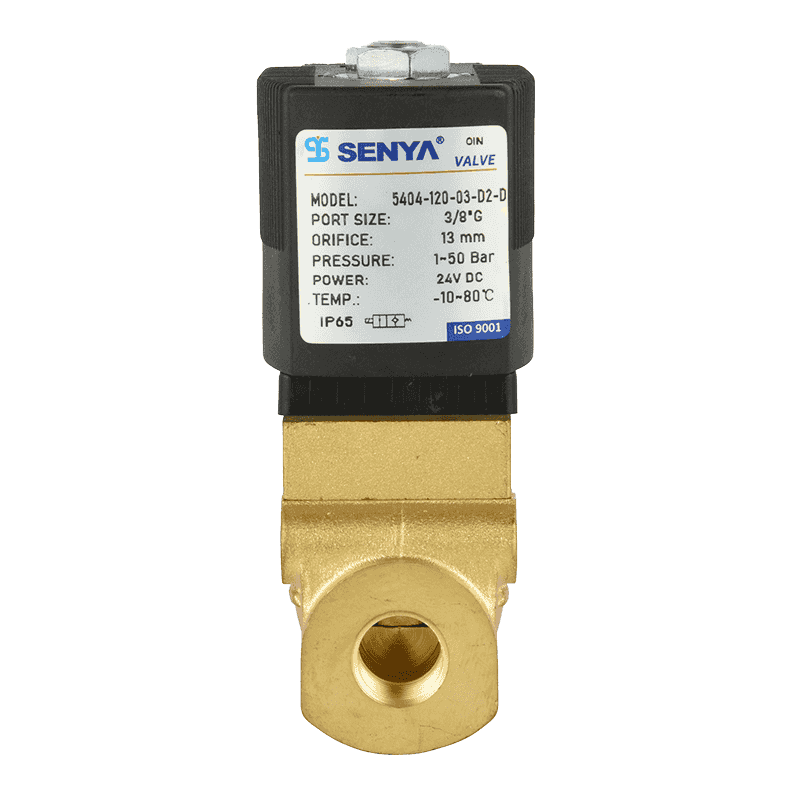
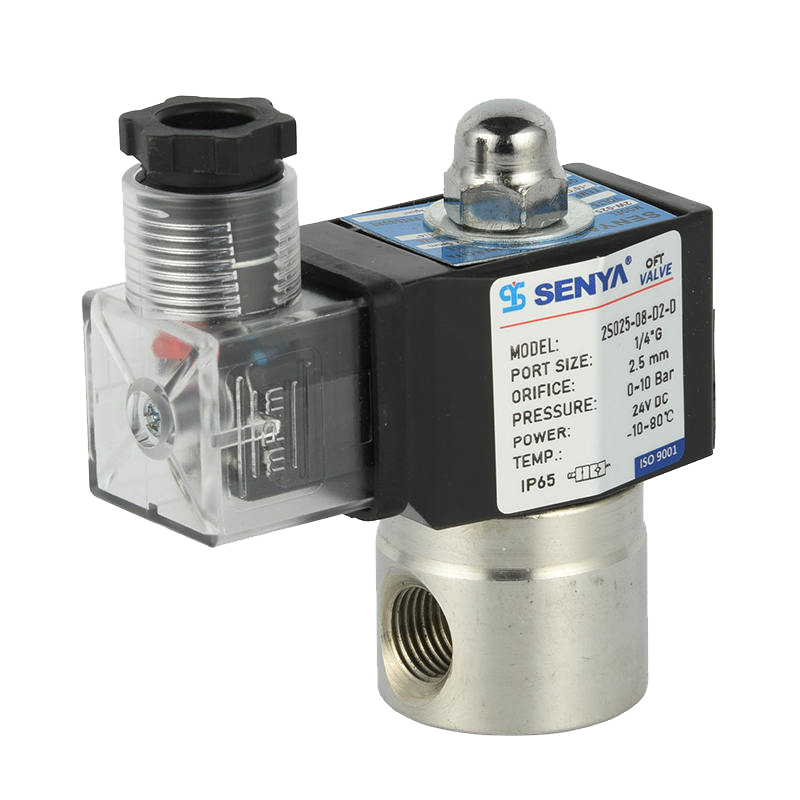
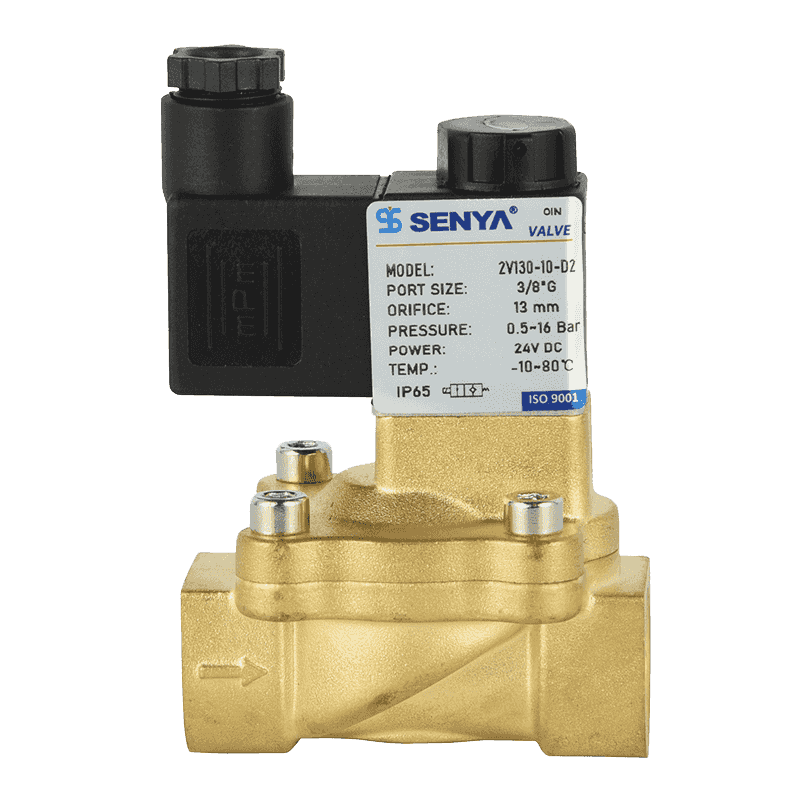
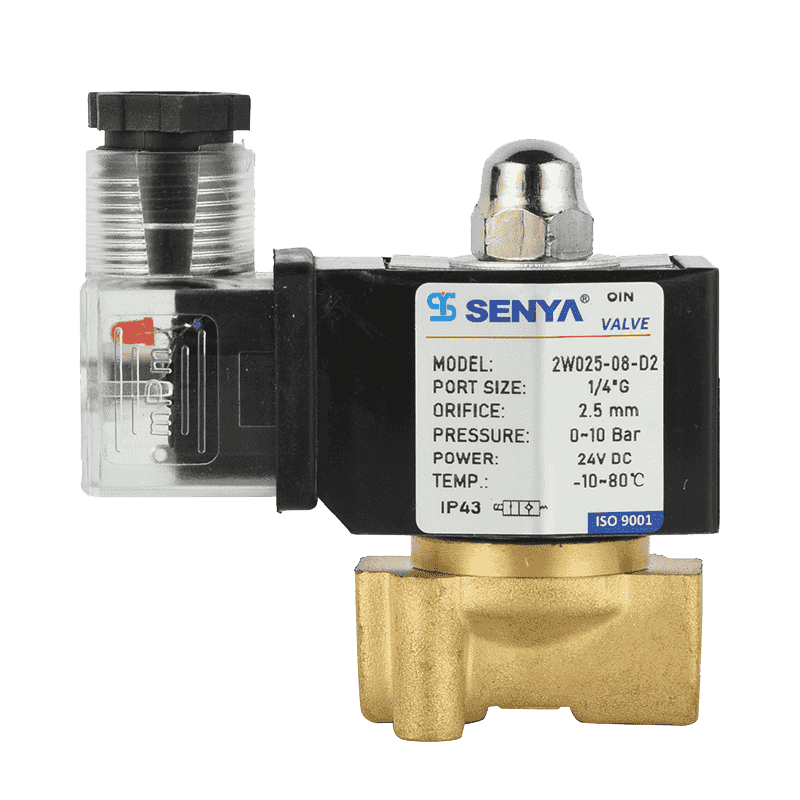
For most industrial steam and hot-fluid duty, we build the brass 2W series solenoid valve with FKM seals and a Class H coil. When the process demands more corrosion resistance and a wider temperature margin, the SUS304 2S series high temperature solenoid valve handles saturated steam up to 200°C, and the SUS304 2SK series valve adds a reinforced construction for cyclic steam hammer conditions.
.png) Zero differential pressure start and acid, alkali resistant stainless steel normNingbo SENYA Pneumatic Technology Co., Ltd. is China Zero differential pressure start and acid, alkali resistant stainless steel normally...View Product →
Zero differential pressure start and acid, alkali resistant stainless steel normNingbo SENYA Pneumatic Technology Co., Ltd. is China Zero differential pressure start and acid, alkali resistant stainless steel normally...View Product → Direct acting 2/2 ways stainless steel acid and alkali resistance normally closeNingbo SENYA Pneumatic Technology Co., Ltd. is China Direct acting 2/2 ways stainless steel acid and alkali resistance normally closed so...View Product →
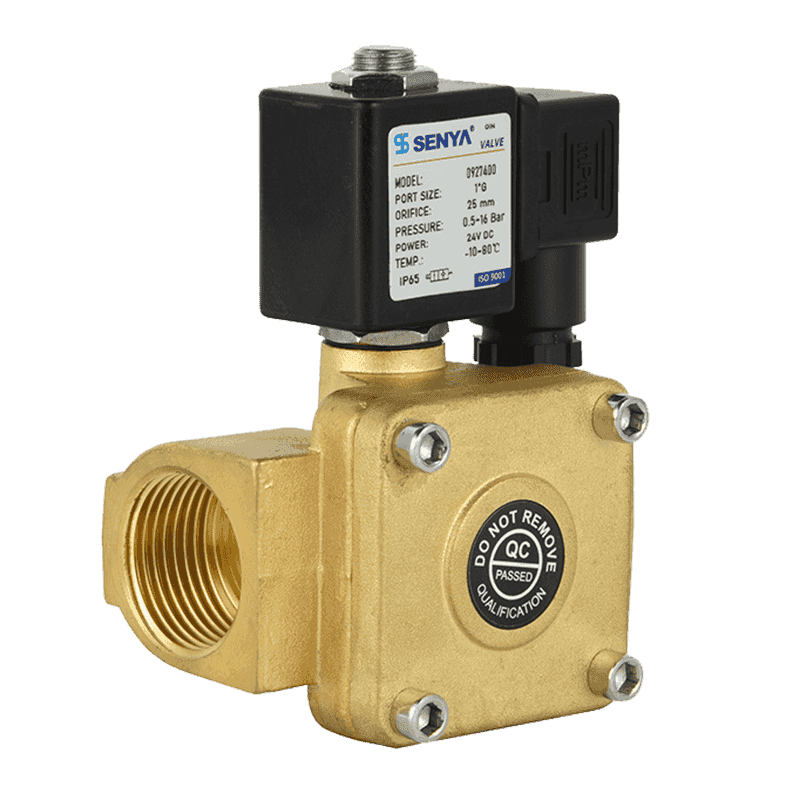
 A large water control 2/2 ways brass solenoid valve with high Impurity toleranceNingbo SENYA Pneumatic Technology Co., Ltd. is China A large water control 2/2 ways brass solenoid valve with high Impurity tolerance cap...View Product →
All three series are batch-tested on precision automatic digital test platforms before shipment, a process documented in our company overview.
Applications Where Real Temperatures Are Higher Than Buyers Expect
Buyers often calculate temperature from the process setpoint and forget that a valve sitting close to a sterilizer or a drying oven also collects radiant heat from the environment. The applications below regularly push a standard valve past its limit.
Typical media temperature ranges by application.
- Steam sterilization in medical and pharmaceutical lines: 121–134°C.
- Food processing hot-fill and blanching: 85–120°C.
- Textile dyeing and washing: 90–130°C.
- Mold temperature control: 120–180°C.
- Hot gas pulse cleaning in dust collectors: 90–150°C.
In these environments, the performance analysis of brass solenoid valves in extreme environments explains why the same valve family behaves differently on paper and in the field.
Brass or Stainless Steel? A Radar Comparison
For a high temperature solenoid valve, the body material argument usually comes down to brass versus stainless steel. The radar chart below shows how the two materials score for six criteria that matter in hot-media service.
Brass versus stainless steel for high temperature solenoid valve service.
Brass wins on cost economy and is easier to machine into complex internal passageways. Stainless steel wins on heat resistance, corrosion resistance, and media compatibility, which is why steam users in food and pharmaceutical plants tend to standardize on stainless steel despite the higher unit price.
A Practical High Temperature Solenoid Valve Selection Checklist
Use this checklist before sending a purchase order or reviewing a distributor quote.
- Measure the actual media temperature at the valve inlet, not the process setpoint.
- Confirm that the coil insulation class matches the worst-case ambient temperature plus the heat radiated from adjacent piping.
- Verify seal compatibility with the fluid and the working temperature together, not separately.
- Review the pressure-temperature derating curve; a valve rated at 1.6 MPa at 20°C may be limited to half that at 180°C.
- Check the rated duty cycle at the operating temperature.
- Specify a waterproof version when steam lines create humid ambient conditions.
Where the Heat Goes: A High Temperature Solenoid Valve Cutaway
The isometric view below shows the main parts that decide a high temperature solenoid valve's thermal limit. Heat from the media flows into the valve body, then into the armature tube, and finally into the coil. The slower that path, the longer the coil survives.
Isometric view of a 2/2-way high temperature solenoid valve.
Reducing that heat path is why stainless steel valves often carry a thermal-break spacer between the body and the coil housing. If a supplier cannot explain how their high temperature design manages coil temperature, ask for measured coil surface temperature data at the rated media temperature.
Frequently Asked Questions About High Temp Solenoid Valves
What is the maximum temperature for a solenoid valve?
Standard solenoid valves with plastic bodies and NBR seals are typically rated for 60–80°C. High temperature designs with brass or stainless steel bodies, FKM or PTFE seals, and Class H coils operate continuously at 150–200°C depending on media and pressure.
Can a solenoid valve be used on steam?
Yes, but only when the body material, seal compound, and coil insulation class are rated for steam temperature and condensation. Brass and stainless steel 2/2-way valves with FKM or PTFE seals are common choices for steam up to about 200°C.
What is the difference between Class B and Class H coils?
The coil insulation class defines the maximum continuous winding temperature. Class B is rated at 130°C, Class F at 155°C, and Class H at 180°C. A Class H coil provides a much wider safety margin when hot media conducts heat into the coil area.
Why does my solenoid valve fail even though my media is only 120°C?
Measure the temperatures you are not tracking: ambient air around the valve, radiant heat from adjacent pipes, and the coil surface after one hour of continuous duty. The coil can run 30–40°C above the media temperature.
Which is better for high temperature service, brass or stainless steel?
Brass is economical and reliable for hot water and low-pressure steam up to about 150°C. Stainless steel 304 is the better choice above 150°C, for saturated steam, or when corrosion resistance and longer maintenance intervals matter more than initial cost.
How can I extend the service life of a high temp solenoid valve?
Keep the coil cool: allow ventilation around the valve, avoid mounting directly above a steam trap, moderate the duty cycle, and confirm that the coil insulation class and seal compound are matched to the worst-case temperature, not the average.
.png?imageView2/2/w/326/h/326/format/jpg/q/75)
.png?imageView2/2/w/326/h/326/format/jpg/q/75)
.png?imageView2/2/w/326/h/326/format/jpg/q/75)
.png?imageView2/2/w/326/h/326/format/jpg/q/75)
.png?imageView2/2/w/326/h/326/format/jpg/q/75)