
 简体中文
简体中文 English
 Русский
A solenoid valve that fails on a filling line, a dust collector or a packaging machine rarely fails at random. Ask what changed in the six weeks before the fault and a pattern usually appears: the coil has been running hotter than its insulation class allows, line pressure has dropped below the valve's minimum differential, or the diaphragm has been sitting in a medium it was never specified for.
The conclusion first: an air actuated solenoid valve is chosen by four values, in order of priority — pressure range and minimum operating differential, orifice size, coil voltage and power, and duty cycle. Everything else on a datasheet hangs off those four decisions. Get them right and the valve quietly does its job for years. Get one wrong and no maintenance schedule will compensate.
Content
- 1 What an Air Actuated Solenoid Valve Actually Does
- 2 The Specifications That Decide Performance
- 3 Sizing the Orifice: Why Bigger Is Usually Wrong
- 4 Body Material, Media and Working Environment
- 5 Coil Voltage, Duty Cycle and Heat
- 6 Installation and Maintenance Points That Prevent Most Failures
- 7 Frequently Asked Questions About Air Actuated Solenoid Valves
- 7.1 Q1. What is an air actuated solenoid valve used for?
- 7.2 Q2. What is the difference between a 2/2 and a 3/2 air solenoid valve?
- 7.3 Q3. How do I choose the right orifice size?
- 7.4 Q4. Can a water solenoid valve be used for compressed air?
- 7.5 Q5. Why does my pneumatic solenoid valve coil keep burning out?
- 7.6 Q6. How often should an air actuated solenoid valve be replaced?
What an Air Actuated Solenoid Valve Actually Does
The phrase covers two different ideas, and the overlap causes genuine specification errors.
In the first sense it means a solenoid valve that switches compressed air — a 2/2 way valve opening or closing a single air line, or a 3/2 or 5/2 valve redirecting air to a cylinder. In the second sense it describes the opening mechanism: the coil does not lift the main seal on its own. It opens a small pilot passage, and line air pressure then pushes the diaphragm or piston aside. That is a valve genuinely actuated by air.
The difference shows up at low pressure. A direct-acting valve opens from zero bar, which suits dosing circuits, vacuum-adjacent lines and gravity-fed supply. A pilot-operated valve normally needs a minimum pressure differential of roughly 0.02 to 0.05 MPa before the diaphragm shifts. Fit one to a line that never reaches that differential and it will buzz, leak past the seal, or refuse to open at all.
Parts of a pilot-operated 2/2 way solenoid valve. The coil moves only the small pilot plunger; the diaphragm itself is driven by line pressure.
The Specifications That Decide Performance
Four entries on a datasheet do most of the work, and each one has a characteristic failure mode when it is misread.
| Specification | What it controls | Typical range | Common mistake |
|---|---|---|---|
| Pressure range and minimum differential | Whether the valve can open at all | Direct-acting: 0 to 1.0 MPa. Pilot-operated: needs 0.02 to 0.05 MPa differential | Ordering a pilot valve for a gravity-fed or low-pressure line |
| Orifice and port size | Flow rate and actuation speed | DN1 to DN50, G1/8 to G2 threads | Oversizing for safety, which slows response and wastes air |
| Coil voltage and power | Compatibility with the control circuit | AC 24 / 110 / 220 V, DC 12 / 24 V, 6 to 20 W | Running a DC coil on AC, or ignoring AC inrush current |
| Body and seal material | Media compatibility and service life | NBR, EPDM, FKM, PTFE seals. Brass, stainless steel 304/316, cast aluminium, plastic bodies | Using NBR in a caustic CIP cycle or in hot air |
Response time deserves a separate look, because it varies with design rather than brand.
A direct-acting valve with a small orifice completes its stroke in roughly 10 to 15 ms, which is why it suits fast dosing and short-pulse work. A pilot-operated valve is slower because the diaphragm chamber must fill before the seal moves, but it can handle far larger orifices with a smaller coil. Pulse jet valves sit at the slow end deliberately: a 50 to 100 ms opening delivers a full air blast to a filter bag without punishing the diaphragm.
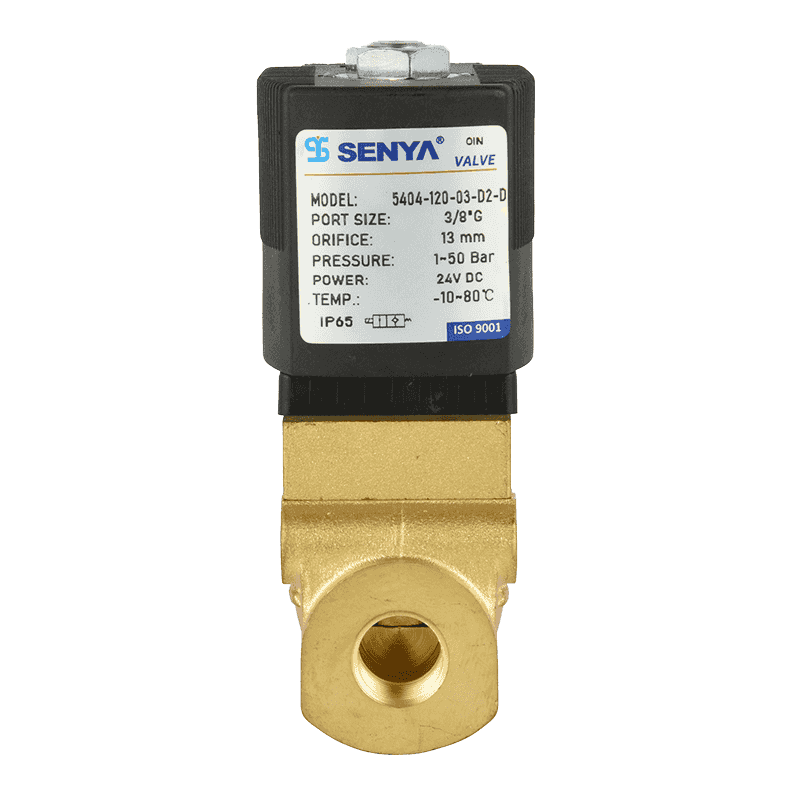
For general duties where the medium is clean air or water between 0.1 and 1.0 MPa, a brass body covers the widest spread of orifice sizes, from compact DN8 units up to DN50 bodies with G2 ports, in normally closed and normally open versions.
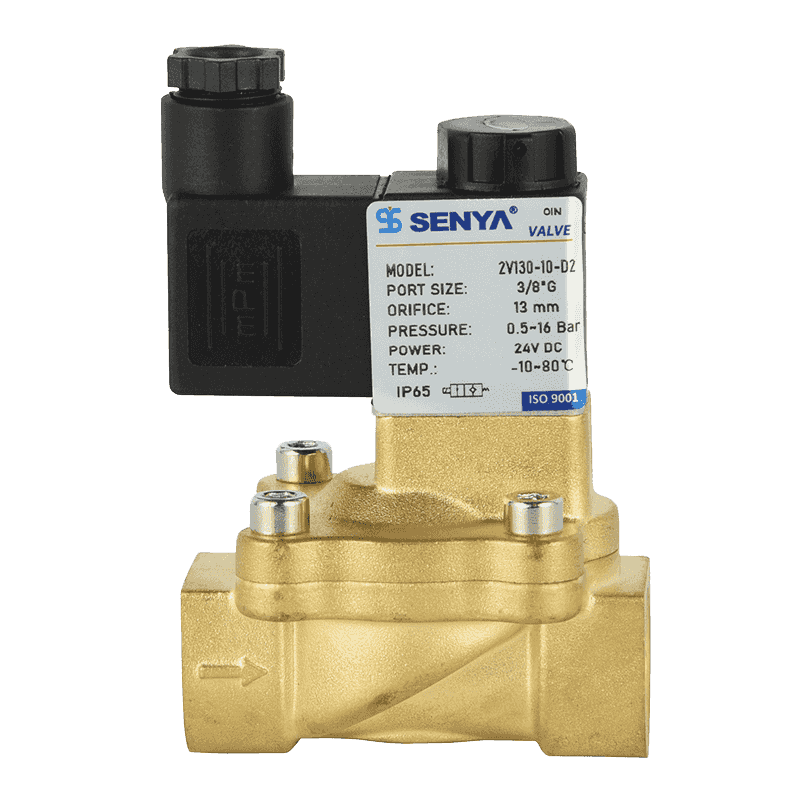
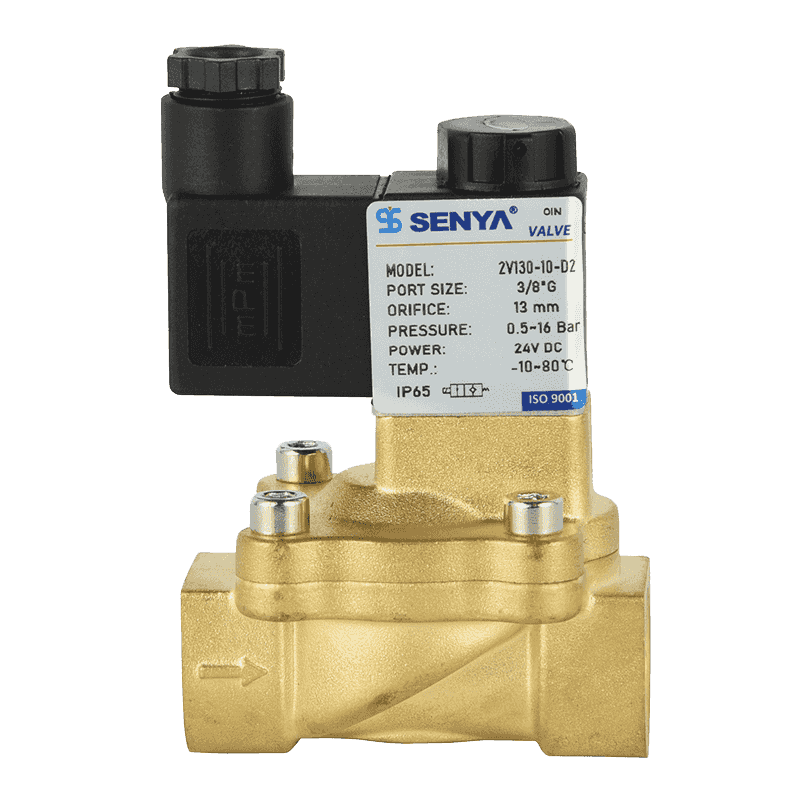 2/2 ways Brass solenoid valve Suppliers2V A green low power consumption, compact structure two position two way solenoid valveView Product →
Sizing the Orifice: Why Bigger Is Usually Wrong
Flow through a solenoid valve behaves like flow through any fixed orifice: it rises with the square root of the differential pressure. Raising the differential from 0.2 MPa to 0.8 MPa — four times the pressure — produces roughly twice the flow, not four times. The curve below is typical of a 2/2 way valve.
Two practical consequences follow. Adding line pressure is an expensive way to buy flow; enlarging the orifice is usually cheaper and more effective. And oversizing the valve to gain headroom backfires — a DN25 body throttling a DN12 duty will hunt, respond slowly and deliver poor repeatability on metering tasks, while the oversized diaphragm takes a harder slam on every closing cycle.
A workable rule is to select the smallest orifice that meets the required flow at the lowest differential pressure the line will actually see in service, not the figure printed on the compressor nameplate. Buyers who want a step-by-step version of that comparison can follow the practical guide to choosing the right 2/2 way solenoid valve.
Body Material, Media and Working Environment
Body and seal material decide whether the valve survives its environment, not whether it works on the first day.
The trade-offs are consistent across manufacturers. Brass is the default for air, water and neutral gases up to about 1.0 MPa, and it is the cheapest option per port size. Stainless steel 304 or 316 tolerates aggressive media, high washdown exposure and elevated temperatures, at roughly two to three times the material cost. Cast aluminium suits large-orifice pulse valves for dust collection where weight matters. Engineering plastic covers low-pressure water and inert gas duties.
Seal choice follows the medium rather than the body. NBR is standard for air and water below 80 °C. EPDM handles hot water and mildly caustic clean-in-place chemicals. FKM covers higher temperatures and oils, and PTFE is specified where chemical resistance outweighs a small loss of sealing elasticity. For washdown, food and pharmaceutical duties, a stainless steel body paired with an IP65 coil is the usual starting point.
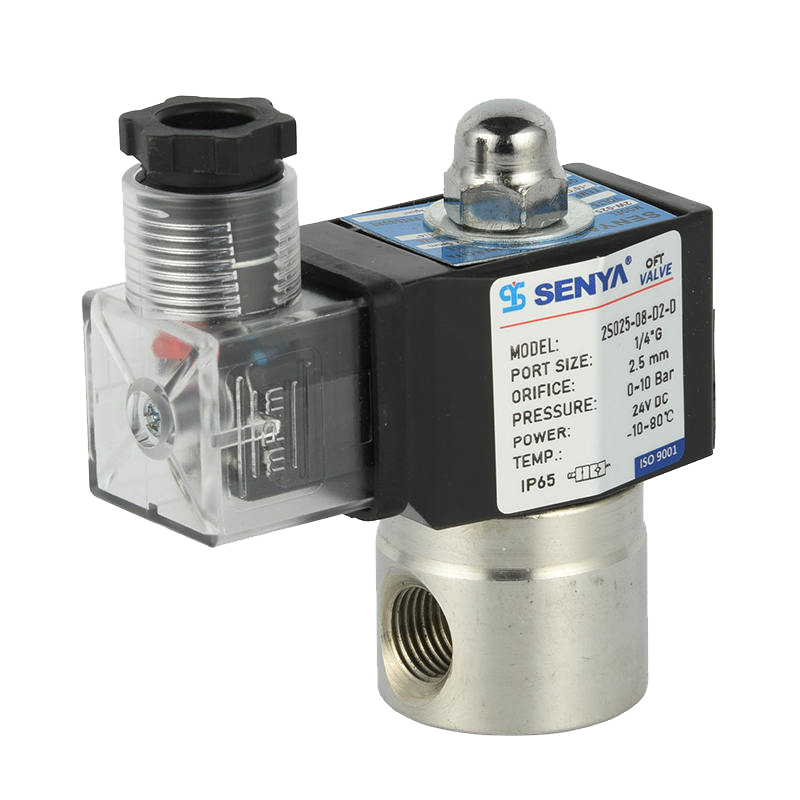
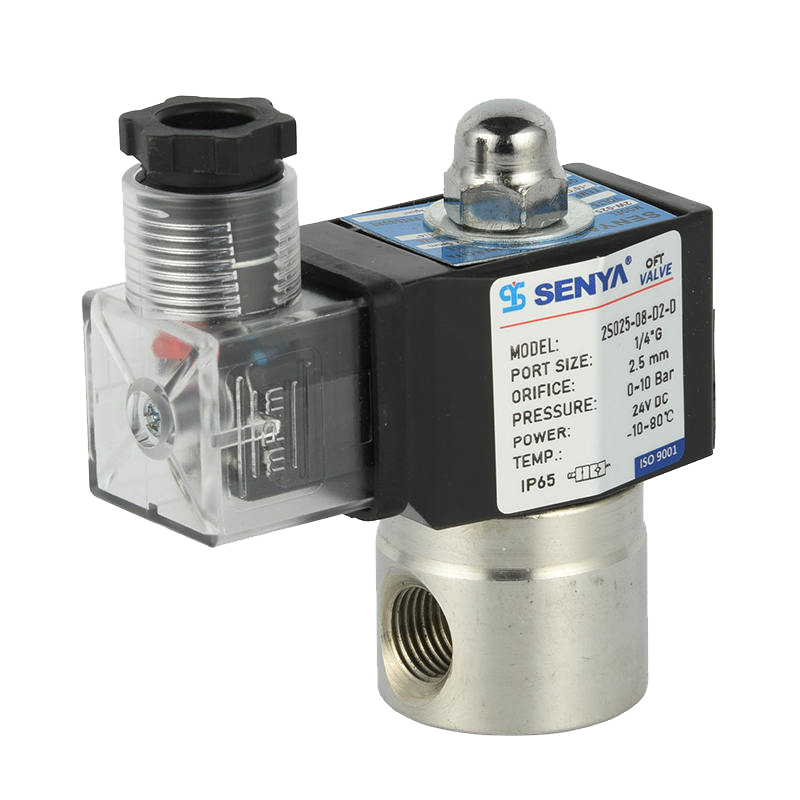 2/2 ways Stainless steel solenoid valve Suppliers2S Direct acting 2/2 ways stainless steel acid and alkali resistance normally closed solenoid valveView Product →
Coil Voltage, Duty Cycle and Heat
Coil failure is the most common electrical complaint about solenoid valves, and the cause is usually thermal rather than electrical. A coil turns electrical energy into a magnetic field, and whatever is not converted becomes heat. Two numbers govern the outcome: the ambient temperature the coil is rated for, and the duty cycle (ED, expressed as a percentage of energised time). A coil rated ED 100 percent is built for continuous energisation; a coil rated ED 50 percent is not. Run the second one continuously and the insulation will degrade long before its nominal service life.
- AC coils draw a high inrush current for the first few cycles and settle to a lower holding current. Control circuits sized only for holding current will trip or overheat.
- DC coils draw constant current and produce no hum, but run warmer for the same holding force unless deliberately derated.
- Insulation class matters: class B (130 °C) and class F (155 °C) have different margins when the valve sits inside a hot enclosure.
- An IP65 or IP67 coil with a moulded DIN plug is worth the small premium in washdown, outdoor or dusty plants.
- If the application fires the valve hundreds of times per minute, a purpose-built pulse valve is the correct choice rather than a standard 2/2 way valve.
Pulse jet valves for bag filters and cartridge dust collectors are designed for exactly that condition: a large diaphragm, a deliberate stroke and a coil sized for short bursts rather than continuous duty.
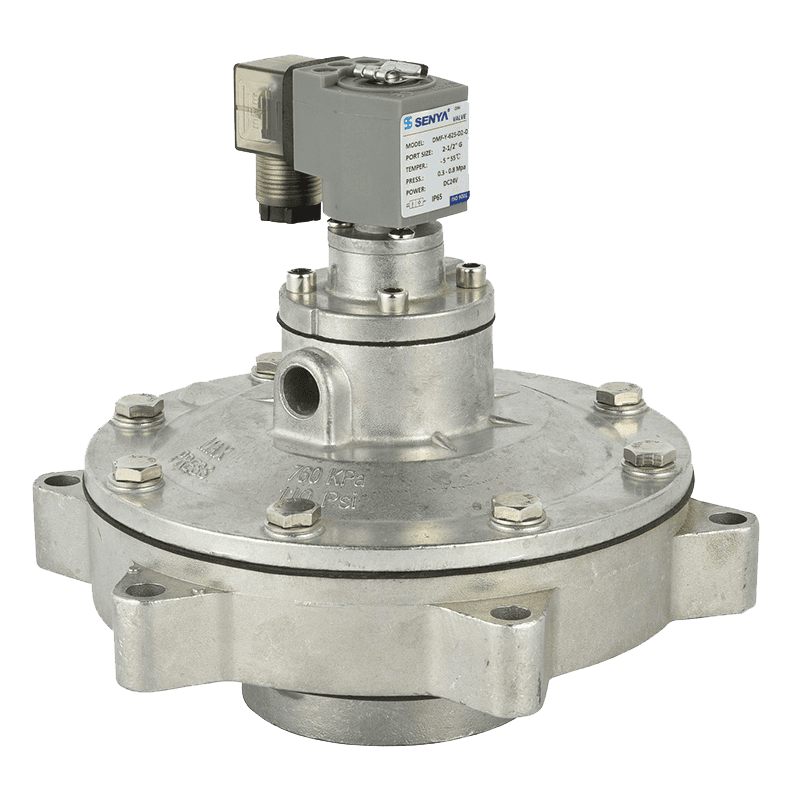 2/2 ways Pulse solenoid valve SuppliersDMF-Y Submersible type long life withstand harsh working environment pulse valveView Product →
Installation and Maintenance Points That Prevent Most Failures
Most field failures trace back to installation choices rather than manufacturing defects.
- Fit a filter upstream. Pilot-operated valves generally need filtration to 5 µm or better; iron scale and pipe dope are the two most common causes of a stuck pilot.
- Match the flow direction to the arrow. A 2/2 way valve installed backwards will often stay open or leak through the pilot even when de-energised.
- Mount the coil upright where possible. Horizontal mounting is acceptable on many models, but inverted mounting collects condensation inside the coil housing.
- Use the correct thread sealant. PTFE tape applied past the first thread can shear off and travel into the pilot orifice.
- Check minimum differential at the valve, not at the compressor. Pressure drop across filters and long pipe runs is often 0.05 MPa or more.
- Inspect the diaphragm on a schedule. Typical NBR diaphragms in continuous duty last one to three years; heat, aggressive media and rapid cycling shorten that considerably.
Frequently Asked Questions About Air Actuated Solenoid Valves
Q1. What is an air actuated solenoid valve used for?
It controls the start, stop or direction of compressed air in a pneumatic circuit. Typical duties are switching air to a cylinder, isolating a branch line, pulsing a dust collector, and dosing air or water in filling and packaging equipment.
Q2. What is the difference between a 2/2 and a 3/2 air solenoid valve?
A 2/2 way valve has two ports and two positions, so it opens or closes a single line. A 3/2 way valve has three ports and switches supply between an outlet and an exhaust, which is what a single-acting cylinder needs.
Q3. How do I choose the right orifice size?
Start from the required flow at the lowest differential pressure the line will see in service, then pick the smallest orifice that meets it. Oversizing costs air, slows response and hurts repeatability.
Q4. Can a water solenoid valve be used for compressed air?
Often yes, provided the seal material and pressure rating suit the duty. Brass 2/2 way valves with NBR seals handle both air and water. For steam, aggressive chemicals or potable water, check the diaphragm and body specification separately.
Q5. Why does my pneumatic solenoid valve coil keep burning out?
The three usual causes are a duty cycle exceeding the coil's ED rating, ambient temperature above the rated value, and sustained over- or under-voltage. A coil rated ED 100 percent at correct voltage in a ventilated enclosure rarely fails thermally.
Q6. How often should an air actuated solenoid valve be replaced?
Replace on condition rather than on a calendar. Inspect the diaphragm and pilot filter every 6 to 12 months in continuous duty, and replace the diaphragm when response slows or leakage appears. Coils usually outlast diaphragms and can be changed separately.
Specification errors are far more common than manufacturing defects in this component category. A valve chosen against real line pressure, real flow demand, real duty cycle and real media will generally outlast the equipment it is fitted to. SENYA has produced pneumatic valves, cylinders, air treatment units and push-in fittings in Ningbo since 1994, and publishes full series data in its 2024 English product catalogue. You can review the production background and material capability on the company about page before finalising a specification.
.png?imageView2/2/w/326/h/326/format/jpg/q/75)
.png?imageView2/2/w/326/h/326/format/jpg/q/75)
.png?imageView2/2/w/326/h/326/format/jpg/q/75)
.png?imageView2/2/w/326/h/326/format/jpg/q/75)
.png?imageView2/2/w/326/h/326/format/jpg/q/75)