
 简体中文
简体中文 English
 Русский
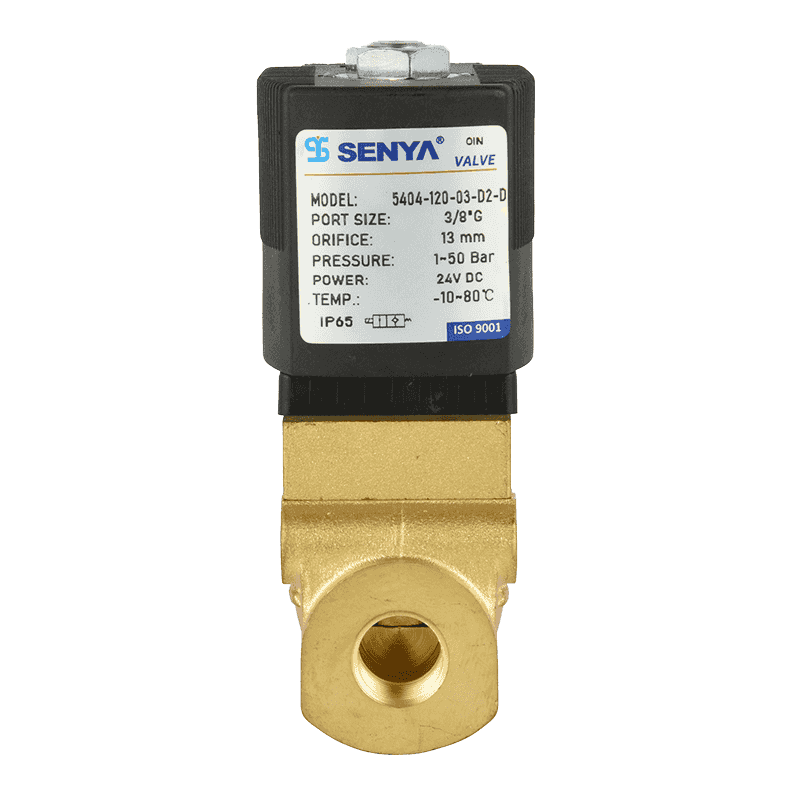
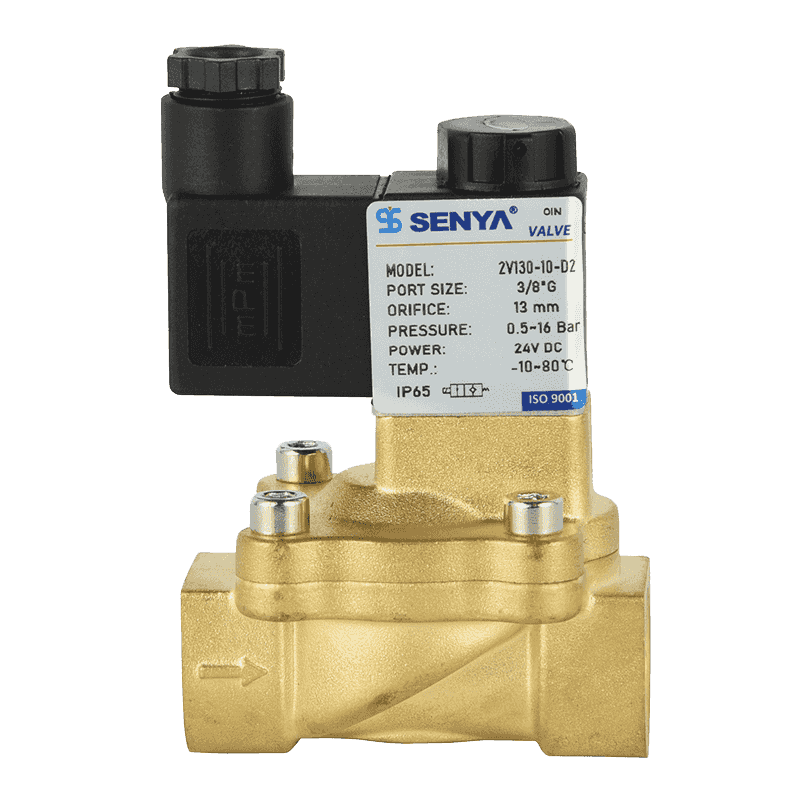
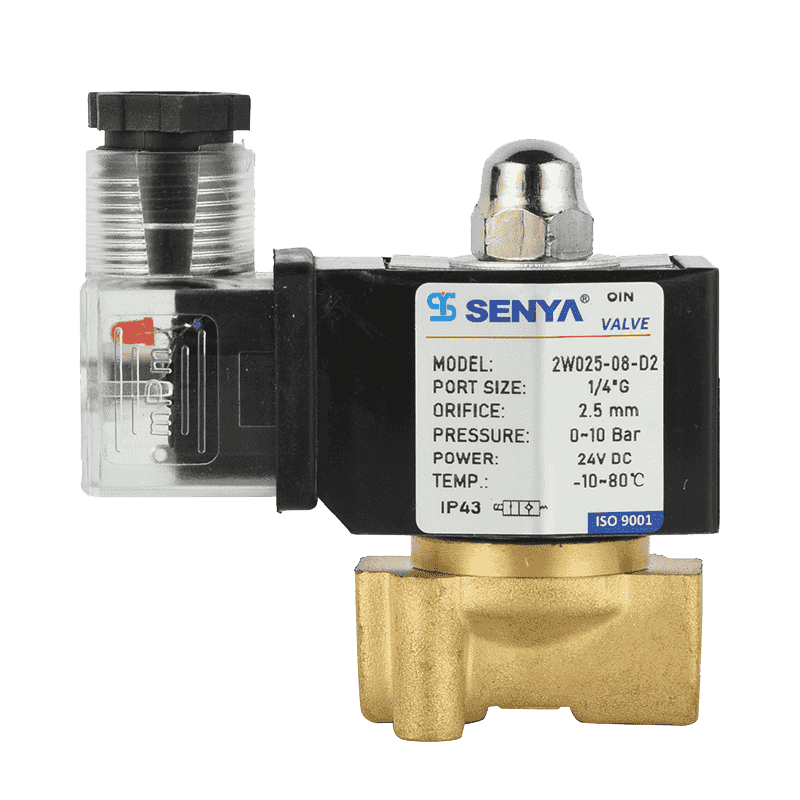
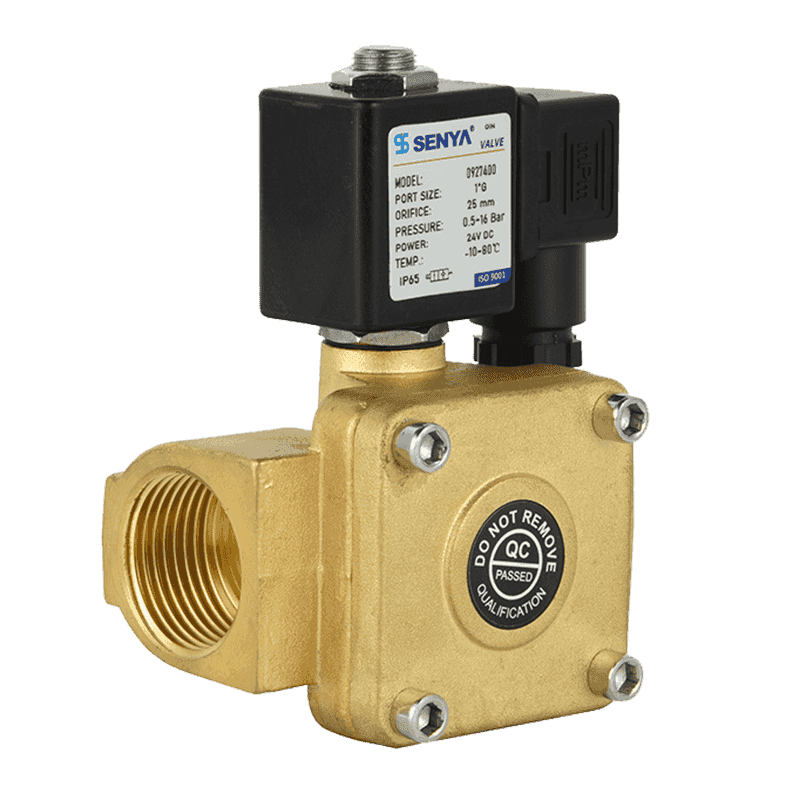
A 2-way solenoid valve is an electromagnetically operated valve with one inlet port and one outlet port that opens or closes a fluid path along a single line, essentially acting as an electric on/off switch for liquids, air, or gas. When the coil is energized, the plunger lifts (or drops, depending on design) to allow flow; when de-energized, it returns to its resting position to block flow. This single mechanism is why the 2/2 solenoid valve is the most widely used valve configuration in industrial automation, water systems, and pneumatic circuits. Below, we explain how it works, where it's used, and how it compares to other valve types, supported by data visualizations and technical comparisons.
Content
- 1 What Does "2-Way" Actually Mean in a Solenoid Valve?
- 2 How a 2/2 Way Solenoid Valve Works: The Basic Mechanism
- 3 Common Applications of the 2/2 Solenoid Valve
- 4 Two Way Solenoid Valve vs Other Valve Configurations
- 5 Normally Closed vs Normally Open: Choosing the Right Configuration
- 6 Material Selection: Brass, Stainless Steel, and Cast Iron
- 7 Temperature and Pressure Range Considerations
- 8 Valvula Pneumatica: Pneumatic Use Cases for 2-Way Solenoid Valves
- 9 Choosing the Right 2/2 Solenoid Valve for Your System
- 10 About Ningbo SENYA Pneumatic Technology Co., Ltd.
- 11 Frequently Asked Questions
What Does "2-Way" Actually Mean in a Solenoid Valve?
The "2-way" designation in a solenoid valve refers to the number of ports the valve has, not the number of operating states. A 2-way valve has exactly two ports: one for fluid to enter and one for fluid to exit. This is different from a 3-way valve, which has three ports and can divert flow between two different paths, or a 4-way valve, which is typically used to control double-acting cylinders in pneumatic systems.
Within the 2-way category, the valve is also classified as either normally closed (NC) or normally open (NO). A normally closed valve blocks flow when de-energized and opens when power is applied, making it the most common configuration for safety-critical shutoff applications. A normally open valve does the opposite, remaining open until energized, which is useful in systems where flow should continue by default during a power failure.
How a 2/2 Way Solenoid Valve Works: The Basic Mechanism
A 2/2 way solenoid valve operates through a simple electromagnetic principle. An electric current passing through the coil generates a magnetic field, which pulls a metal plunger (armature) either up or down depending on the valve's normally open or normally closed design. This plunger movement opens or seals an orifice, directly starting or stopping the flow of the medium passing through the valve body.
- Power is applied to the solenoid coil, generating a magnetic field
- The plunger is pulled along its axis, lifting away from (or onto) the valve seat
- Fluid or gas flows freely through the now-open orifice
- When power is cut, a spring returns the plunger to its resting position
- Flow is sealed off again, completing the on/off cycle
This direct-acting mechanism makes the 2-way solenoid valve extremely fast-responding, with many models achieving switching times under 50 milliseconds, which is one reason they're favored in automated process lines where rapid, repeatable on/off cycling is required.
Common Applications of the 2/2 Solenoid Valve
Because of its simplicity and reliability, the 2/2 solenoid valve appears across a wide range of industries. It is the standard choice whenever a system needs a straightforward, automated way to start or stop flow along a single pipeline without redirecting it elsewhere.
- Water solenoid valve applications in irrigation, car washing, and water treatment systems
- Pneumatic circuits controlling air supply to actuators and tools
- Medical and laboratory sterilization equipment requiring precise fluid shutoff
- Food and beverage processing lines needing hygienic, repeatable flow control
- Dust removal and mining systems where on/off air or fluid bursts are required
- Music fountain and decorative water feature control systems
This horizontal bar chart illustrates the relative frequency of 2-way solenoid valve usage across common industrial sectors based on typical application reports. Irrigation, water control, and general pneumatic circuits represent the highest-volume use cases, since both rely heavily on simple, repeated on/off flow switching. Niche applications like decorative water features still use the same core valve technology, just at smaller scale and lower duty cycles.
Two Way Solenoid Valve vs Other Valve Configurations
Understanding how a two way solenoid valve compares to 3-way and 4-way configurations helps clarify why it remains the default choice for simple shutoff tasks. The radar chart below compares four valve types across five performance and design dimensions: simplicity, cost-efficiency of design, response speed, flow path flexibility, and typical application range.
The radar comparison shows that the 2-way solenoid valve scores highest on simplicity, maintenance ease, response speed, and overall application range, since it is used across more general shutoff scenarios than specialized diverting valves. Where 3-way and 4-way valves outperform is flow flexibility, because they can redirect fluid between multiple paths, which a 2-way valve simply cannot do by design. This trade-off is exactly why engineers select valve type based on whether the task is "stop/start flow" versus "redirect flow."
Normally Closed vs Normally Open: Choosing the Right Configuration
Selecting between normally closed and normally open configurations for a 2/2 way solenoid valve depends entirely on what should happen to the system during a power outage or signal loss. In most safety-driven applications, such as gas lines or water shutoff systems, a normally closed valve is preferred because the default "fail-safe" state is for flow to stop automatically. Normally open valves are reserved for processes where continuous flow is more critical than the risk of overflow, such as certain cooling-water circuits.
| Characteristic | Normally Closed (NC) | Normally Open (NO) |
|---|---|---|
| Default State (No Power) | Closed / No Flow | Open / Flow Continues |
| Energized State | Open / Flow Allowed | Closed / No Flow |
| Typical Use Case | Safety shutoff, irrigation timers | Continuous cooling circuits |
| Power Failure Behavior | Fails safe (flow stops) | Fails open (flow continues) |
Material Selection: Brass, Stainless Steel, and Cast Iron
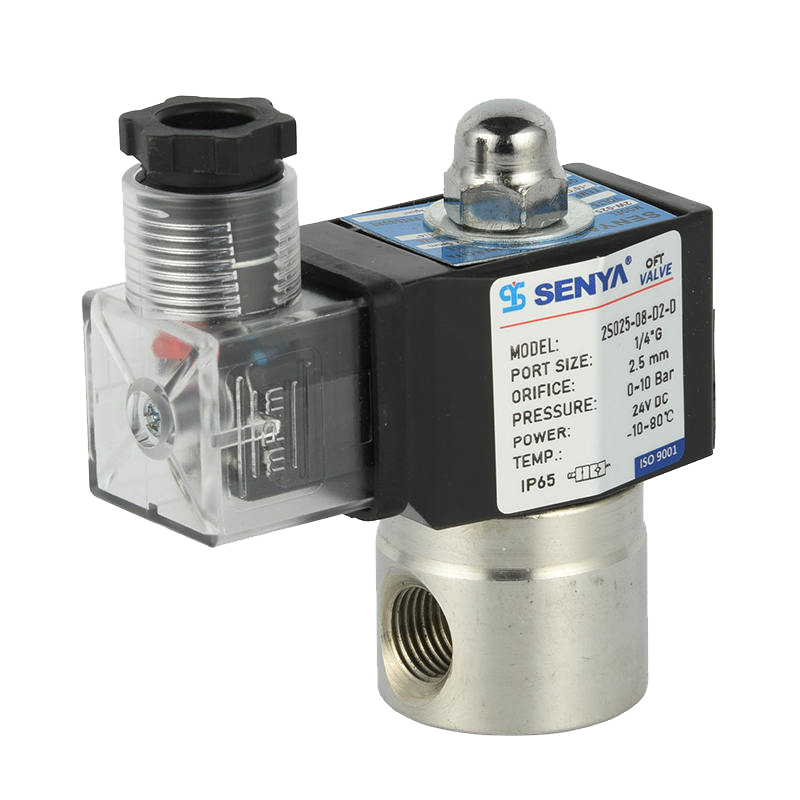
The body material of a water solenoid valve or general process valve plays a major role in its lifespan and suitability for different media. Brass valves are the most common general-purpose option, offering good corrosion resistance for water and air at moderate cost. Stainless steel valves provide significantly higher corrosion resistance, making them suitable for aggressive chemicals, seawater, or food-grade hygienic applications. Cast iron valves are typically chosen for larger-diameter, lower-cost industrial water lines where extreme corrosion resistance is not the primary concern.
The bar chart above provides a general comparison of relative corrosion resistance among the three most common solenoid valve body materials. Stainless steel consistently performs best in harsh or chemically aggressive environments, which is why 2/2 ways solenoid valve models built for sterilization, marine, or chemical dosing applications are usually specified in stainless steel. Brass remains the practical mid-range choice for standard water and air systems, while cast iron is generally reserved for larger industrial water lines where budget efficiency at scale matters more than maximum corrosion resistance.
Temperature and Pressure Range Considerations
Every solenoid valve 2 way design has a rated operating envelope defined by temperature and pressure limits, and exceeding either can compromise seal integrity or coil performance. Industrial-grade valves are commonly engineered to operate across a wide span, for example from -20°C to 200°C (-4°F to 392°F), and from near micro-vacuum conditions up to 200 bar (4351 psi) for high-pressure variants. Matching the valve's rated range to your actual process conditions, with a reasonable safety margin, is one of the most important steps in valve selection.
This line chart illustrates a common engineering pattern: maximum rated pressure tends to be highest near standard ambient temperature and gradually decreases as the valve approaches the extreme ends of its temperature range. This is because elastomer seals and metal components experience more thermal expansion or seal softening at higher temperatures, which reduces the safe pressure ceiling. Selecting a valve with adequate protection rating, such as IP43, IP65, or IP68, also helps maintain consistent performance when the valve is exposed to dust, moisture, or washdown conditions in harsh environments.
Valvula Pneumatica: Pneumatic Use Cases for 2-Way Solenoid Valves
In pneumatic systems, a valvula pneumatica (pneumatic valve) of the 2-way solenoid type is typically used to control compressed air supply to cylinders, actuators, and tools rather than liquid media. Because air is compressible and generally cleaner than many liquid media, pneumatic 2-way solenoid valves can often achieve faster cycle times and longer service intervals compared to liquid-handling counterparts.
Typical Pneumatic Applications
Common pneumatic deployments include controlling air to single-acting cylinders, gating air supply lines in automated production equipment, and managing air bursts in dust collection or filter-cleaning systems. In each case, the valve's job remains the same as in liquid service: start or stop a single flow path reliably and repeatedly.
Choosing the Right 2/2 Solenoid Valve for Your System
Selecting the correct 2/2 solenoid valve comes down to matching several specifications to your actual operating conditions rather than choosing based on a single factor alone. The questions below cover the core decision points most engineers and procurement teams work through.
- What medium will pass through the valve (clean water, air, chemicals, steam)?
- What is the expected temperature and pressure range during normal and peak operation?
- Should the valve fail safe in the open or closed position during a power loss?
- What body material best resists corrosion from the specific medium involved?
- What level of environmental protection (IP rating) is required for the installation site?
Working with an experienced 2/2 Ways Solenoid Valve Manufacturer that can provide technical project support helps ensure these specifications are matched correctly the first time, reducing the risk of premature seal wear or valve failure in service.
About Ningbo SENYA Pneumatic Technology Co., Ltd.
Ningbo SENYA Pneumatic Technology Co., Ltd. has been manufacturing pneumatic components since 1994, operating as a professional 2/2 Ways Solenoid Valve Manufacturer and water solenoid valve factory in China. SENYA produces valves and cylinders across brass, stainless steel, and cast iron materials, with protection levels including IP43, IP65, and IP68 for harsh working environments, and a working range spanning -20°C to 200°C and pressures from micro-vacuum to 200 bar. With production capacity exceeding two million sets of pneumatic components annually, SENYA's products serve applications across car washing, medical sterilizing, automated production lines, mining, dust removal, agricultural irrigation, solar projects, and food processing, exported to more than 30 countries. SENYA combines precision automatic digital testing with technical project support to help clients identify the right fluid control solution for their specific application.
Frequently Asked Questions
| Q1: What is the difference between a 2-way and 3-way solenoid valve?
A 2-way valve has one inlet and one outlet and only starts or stops flow, while a 3-way valve has three ports and can divert flow between two different paths. |
Q2: Can a 2/2 way solenoid valve be used for both water and air?
Yes, many 2-way solenoid valves are designed for multi-media use, though the seal material and body construction should match the specific medium for best results. |
| Q3: How do I know if I need a normally closed or normally open valve?
Choose normally closed if flow should stop automatically during a power failure, and normally open if continuous flow is more important than fail-safe shutoff for your process. |
Q4: What body material is best for a water solenoid valve?
Brass is commonly used for standard water and air applications, while stainless steel is preferred for corrosive media or hygienic, food-grade requirements. |
| Q5: What does the IP rating on a solenoid valve coil mean?
The IP rating indicates how well the valve's coil housing resists dust and moisture intrusion, with higher numbers like IP65 or IP68 suited to harsher washdown or outdoor environments. |
Q6: How fast does a 2-way solenoid valve open and close?
Many direct-acting 2-way solenoid valves switch in well under a second, with some models achieving response times around 50 milliseconds depending on size and design. |
.png?imageView2/2/w/326/h/326/format/jpg/q/75)
.png?imageView2/2/w/326/h/326/format/jpg/q/75)
.png?imageView2/2/w/326/h/326/format/jpg/q/75)
.png?imageView2/2/w/326/h/326/format/jpg/q/75)
.png?imageView2/2/w/326/h/326/format/jpg/q/75)