
 简体中文
简体中文 English
 Русский
Content
- 1 What Is a 2/2 Way Solenoid Valve
- 2 How a 2/2 Way Solenoid Valve Works
- 3 Core Components of a 2/2 Way Solenoid Valve
- 4 Normally Closed vs Normally Open 2/2 Solenoid Valves
- 5 Direct Acting vs Pilot Operated 2/2 Solenoid Valves
- 6 2/2 Way vs 3/2 Way vs 5/2 Way Solenoid Valves
- 7 Common Valve Body Materials
- 8 Voltage and Coil Options
- 9 Flow Capacity and Orifice Size
- 10 Typical Applications of 2/2 Way Solenoid Valves
- 11 How to Select the Right 2/2 Way Solenoid Valve
- 12 Installation and Maintenance Tips
- 13 Working With an Experienced 2/2 Way Solenoid Valve Manufacturer
- 14 Frequently Asked Questions
What Is a 2/2 Way Solenoid Valve
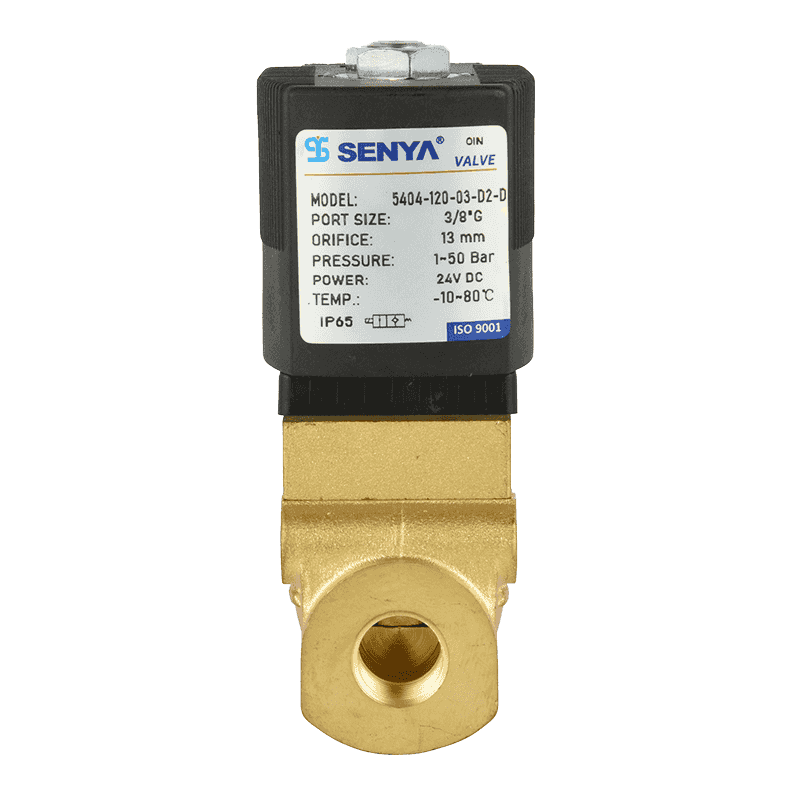
A 2 way solenoid valve, commonly written as a 2/2 solenoid valve, is an electrically operated valve with two ports and two working positions. When the coil receives an electrical signal, the internal plunger shifts position and the flow path between the inlet port and the outlet port either opens or closes. In practical terms, a 2/2 way solenoid valve works as an on and off switch for liquid or gas moving through a pipeline.
The naming itself explains the function. The first number in "2/2" refers to the number of ports on the valve body, and the second number refers to the number of working positions the internal plunger can take. A 2/2 way solenoid valve therefore has exactly one inlet port, one outlet port, and two states: open or closed. This is different from a 3/2 or 5/2 valve, which route flow between multiple paths rather than simply starting or stopping it.
| Feature | Typical Value |
|---|---|
| Port count | 2 ports (1 inlet, 1 outlet) |
| Working positions | 2 (open and closed) |
| Actuation method | Electromagnetic coil and plunger |
| Default state options | Normally closed or normally open |
| Common media | Water, compressed air, mild chemicals, steam |
How a 2/2 Way Solenoid Valve Works
The operating principle of a 2/2 way solenoid valve is based on electromagnetism. A copper coil wraps around a tube that houses a movable plunger, also called an armature. When current flows through the coil, it creates a magnetic field that pulls the plunger away from its resting position. A return spring pushes the plunger back once the current stops. This simple back and forth motion is what opens and closes the orifice inside the valve body.
Simplified isometric structure of a 2/2 way solenoid valve, showing the connector, coil, plunger and spring, valve body, and the two ports
Operating Cycle of a Normally Closed 2/2 Way Solenoid Valve
- Power is applied to the coil terminals through the electrical connector.
- The coil generates a magnetic field around the plunger and armature tube.
- The magnetic field pulls the plunger upward, compressing the return spring.
- The orifice seat is uncovered and the medium moves from the inlet port to the outlet port.
- Once power is removed, the spring pushes the plunger back down and the orifice closes again.
Operating Cycle of a Normally Open 2/2 Way Solenoid Valve
A normally open 2/2 way solenoid valve works in the opposite sequence. The orifice stays open while the coil is de-energized, allowing the medium to flow freely. Once the coil is powered, the plunger moves to seal the orifice and the flow stops. This configuration is chosen for lines that need to remain open under normal operating conditions and only shut off when a specific control signal is triggered.
Core Components of a 2/2 Way Solenoid Valve
Every 2/2 way solenoid valve, regardless of body material or voltage rating, is built from a similar set of internal parts. Understanding each part makes it easier to read a datasheet or explain a fault to a supplier.
| Component | Function |
|---|---|
| Coil (electromagnet) | Generates the magnetic field once electrical current is applied |
| Plunger or armature | Moves inside the coil tube to open or close the orifice |
| Return spring | Pushes the plunger back to its default position when power is removed |
| Valve body | Houses the internal parts and connects to the pipeline through the inlet and outlet ports |
| Seat or orifice | The sealing surface that controls whether the flow path is open or blocked |
| Diaphragm (pilot operated types) | Uses line pressure to help move a larger orifice with a smaller coil |
| Coil housing and connector | Electrical interface and protection against dust and moisture |
Normally Closed vs Normally Open 2/2 Solenoid Valves
A 2/2 way solenoid valve is generally offered in one of two default states. Choosing the correct one depends on what should happen to the process line if electrical power is interrupted.
| Attribute | Normally Closed (NC) | Normally Open (NO) |
|---|---|---|
| State with no power | Closed, no flow | Open, flow passes through |
| State when energized | Open, flow passes through | Closed, no flow |
| Typical use case | Water supply shutoff, irrigation zones, safety shutdown lines | Vent lines, cooling circuits that must stay flowing during a power loss |
In most fluid control installations, a normally closed 2/2 way solenoid valve is the default choice because it keeps the line sealed if electrical power is lost, which reduces the risk of uncontrolled discharge. Normally open valves are reserved for the smaller group of applications where an interrupted signal should not stop the flow.
Direct Acting vs Pilot Operated 2/2 Solenoid Valves
Beyond the normally closed and normally open distinction, a 2/2 way solenoid valve can also be built as a direct acting design or a pilot operated design. The difference lies in how the force needed to open the orifice is generated.
A direct acting valve relies only on the magnetic force of the coil to move the plunger, so it can open from zero pressure differential. This makes it suitable for small orifice sizes, typically up to around 15 to 20 millimeters, and for applications where the line may sit at atmospheric pressure. A pilot operated valve uses the line pressure itself to help lift a diaphragm or piston, which allows a comparatively small coil to control a much larger orifice. Pilot operated designs usually need a minimum pressure difference between the inlet and outlet, often in the range of roughly 0.5 to 1 bar, before they can open reliably.
Relative comparison of direct acting and pilot operated 2/2 way solenoid valves across five practical factors, scored on a simple 1 to 5 scale for illustration
2/2 Way vs 3/2 Way vs 5/2 Way Solenoid Valves
People searching for a 2 way solenoid valve sometimes come across 3/2 and 5/2 valves as well, which can be confusing since all three share the same coil and plunger operating principle. The difference is in how many ports and flow paths each design controls.
| Configuration | Ports | Positions | Common Use |
|---|---|---|---|
| 2/2 way | 2 | 2 | Simple on and off shutoff for water, air, or gas lines |
| 3/2 way | 3 | 2 | Controlling single acting pneumatic cylinders |
| 5/2 way | 5 | 2 | Controlling double acting pneumatic cylinders |
A 2/2 solenoid valve remains the most common choice whenever the goal is simply to start or stop a flow, rather than to direct it to different destinations, which is why it is so widely used for water, irrigation, and general fluid shutoff duty.
Common Valve Body Materials
The body material of a 2/2 way solenoid valve determines how well it resists the media passing through it and how it performs across different temperatures. Four materials cover most industrial and water applications.
Approximate relative corrosion resistance score by valve body material on a 1 to 10 scale, for general comparison only
Brass Solenoid Valve Bodies
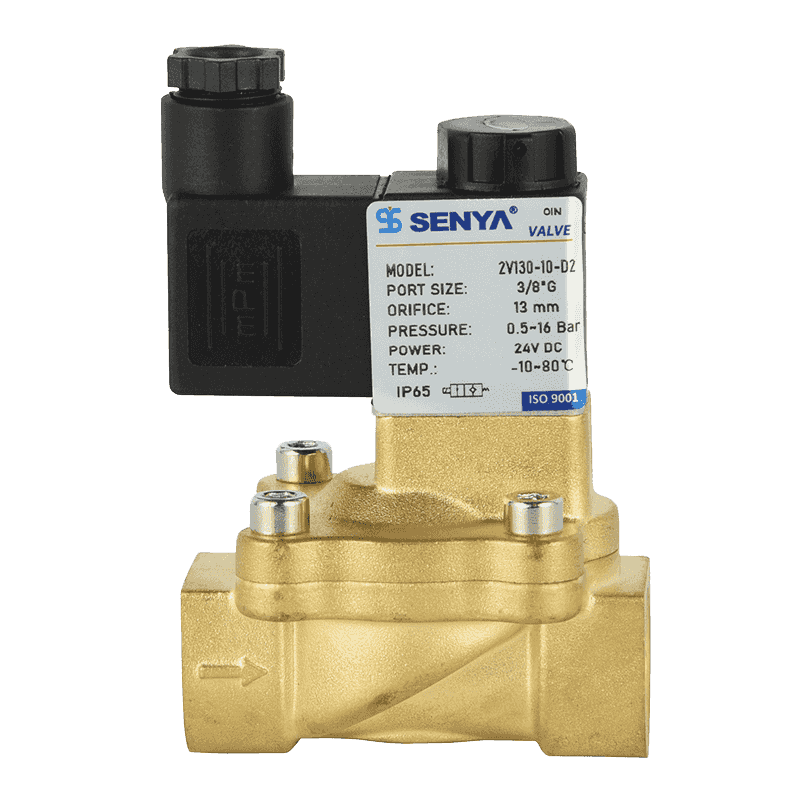
Brass is the standard general purpose material for a 2 way solenoid valve handling compressed air, water, and light oil. It offers a reasonable balance of corrosion resistance and mechanical strength, which is why a brass solenoid valve supplier usually lists it as the default body option for irrigation, general industrial air lines, and basic water shutoff duty.
Stainless Steel Solenoid Valve Bodies
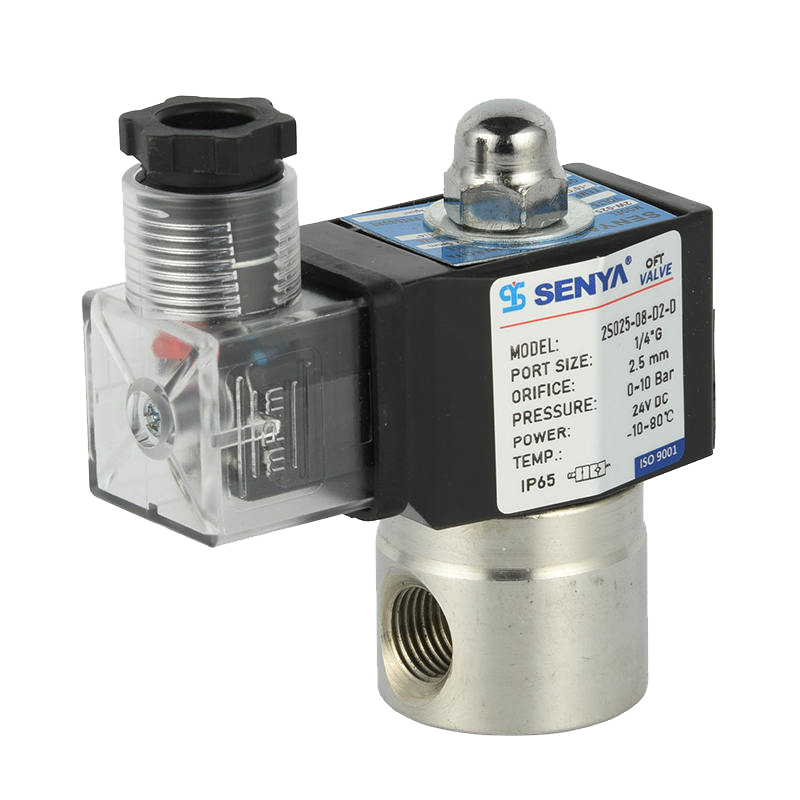
Grades such as 304 and 316 stainless steel handle corrosive or high purity media far better than brass. A stainless steel water solenoid valve is frequently chosen for seawater, brine, cleaning chemicals, food processing lines, and medical sterilizing equipment where surface corrosion or contamination cannot be tolerated.
Engineering Plastic Solenoid Valve Bodies
Materials such as PA, PVC, and POM are lightweight and resist many mild chemicals well. A plastic water solenoid valve is common in agricultural drip irrigation, vehicle wash bays, and other budget conscious water lines, though its maximum working temperature is lower than metal alternatives.
Cast Iron Solenoid Valve Bodies
Cast iron bodies are used on larger port sizes for air and steam service where mechanical strength matters more than weight. They are less suited to humid outdoor settings unless the surface finish is well maintained, since untreated cast iron is more prone to surface rust than brass or stainless steel.
Voltage and Coil Options
The coil of a 2/2 way solenoid valve can be wound for several standard voltages, and the right choice usually depends on the power source already available at the installation site.
- 12V DC coils are common for solar powered drip irrigation controllers and portable, battery operated equipment. Buyers building off grid or solar irrigation skids often look for a 12v water solenoid valve supplier that can match this low voltage requirement.
- 24V DC coils are the standard choice for PLC and automated production line control, since most industrial control panels already output 24V DC signals. A 24v dc solenoid valve manufacturer usually offers this as the default configuration for automation projects.
- 110V or 220V AC coils remain common in fixed municipal, agricultural, and building service installations that are wired directly into mains power without a separate control transformer.
| Voltage | Typical Power Draw | Typical Setting |
|---|---|---|
| 12V DC | 4 to 6 watts | Solar and portable irrigation systems |
| 24V DC | 5 to 8 watts | Industrial automation and PLC control |
| 220V AC | 8 to 12 watts | Fixed building and municipal installations |
Flow Capacity and Orifice Size
The flow capacity of a 2/2 way solenoid valve is usually described using a flow coefficient, often labeled Kv or Cv depending on the region. This number describes how much medium can pass through the open valve for a given pressure drop. A larger orifice diameter generally supports a higher flow coefficient, but it also requires either a larger coil or a pilot operated design to generate enough force to open it.
Approximate flow coefficient values against orifice diameter, shown for illustration purposes since actual performance varies by design
Typical Applications of 2/2 Way Solenoid Valves
Because a 2/2 way solenoid valve is easy to control from a simple digital signal, it appears across a wide range of industries that need reliable, unattended flow shutoff.
Approximate distribution of common end use applications for 2/2 way solenoid valves across fluid control projects
Beyond the categories shown above, 2/2 way solenoid valves also appear in automated production lines, agricultural machinery, and solar heating skids, wherever a simple electrical signal needs to start or stop a fluid path without manual intervention.
How to Select the Right 2/2 Way Solenoid Valve
Choosing a suitable 2/2 way solenoid valve for a project comes down to matching the valve specification to the actual operating conditions of the line. The factors below cover most selection decisions.
- Confirm the media type and its compatibility with the seal and body material.
- Check the working pressure and temperature range of the line against the valve rating.
- Match the available power supply, such as 12V DC, 24V DC, or AC mains voltage.
- Confirm the port size and connection thread type used on the existing pipeline.
- Select a protection rating, such as IP43, IP65, or IP68, based on the installation environment.
- Decide on body material, choosing between brass, stainless steel, engineering plastic, or cast iron.
- Compare the orifice size and flow coefficient against the required flow rate.
- Decide whether the line needs a normally closed or normally open default state.
- Choose direct acting for small orifices and low pressure differentials, or pilot operated for larger orifices.
Installation and Maintenance Tips
A 2/2 way solenoid valve is a relatively simple device, but a few installation habits make a noticeable difference to long term performance.
- Mount the valve with the coil housing upright where the datasheet recommends this orientation, since some coil designs are position sensitive.
- Install upstream filtration to keep debris away from the orifice and seat, which is one of the most common causes of leakage.
- Keep the supply voltage within roughly plus or minus 10 percent of the rated coil voltage to avoid excess heat buildup.
- Cycle valves that sit idle for long periods on a regular schedule to prevent the seat or plunger from sticking.
- Check coil surface temperature periodically, since a coil that runs unusually hot may indicate a wiring or duty cycle issue.
- Seal the cable gland properly on outdoor or washdown installations rated IP65 or IP68 to keep moisture out of the connector.
Working With an Experienced 2/2 Way Solenoid Valve Manufacturer
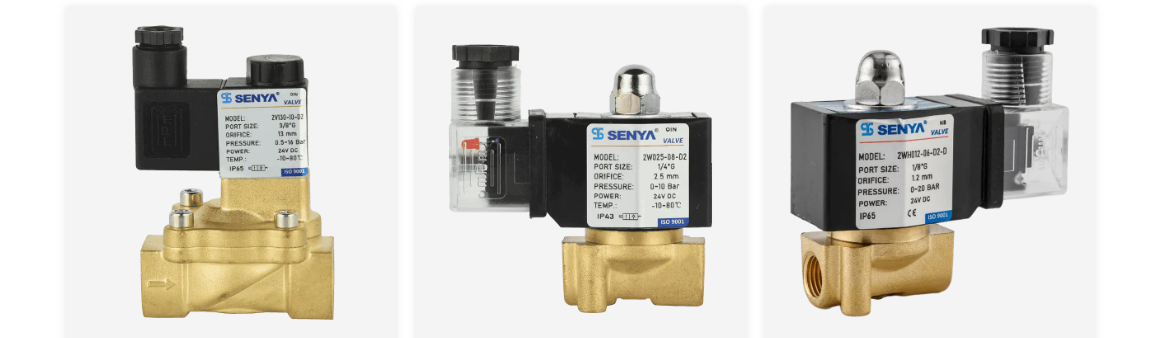
SENYA is a China based 2/2 way solenoid valve manufacturer and water solenoid valve manufacturer operating under Ningbo SENYA Pneumatic Technology Co., Ltd since 1994. The company focuses on valves, cylinders, and related pneumatic components, producing more than 2,000,000 sets of components annually from a large scale production base that combines precision machining with automated digital testing.
SENYA offers 2/2 way solenoid valves across the material range covered earlier in this article, working as a brass solenoid valve supplier for general duty lines and providing options for a stainless steel water solenoid valve or a plastic water solenoid valve depending on the media and budget of the project. On the electrical side, the company supports common coil requirements as a 12v water solenoid valve supplier for solar and portable systems, and as a 24v dc solenoid valve manufacturer for PLC controlled automation lines.
For harsh working environments, SENYA valves are available in protection levels of IP43, IP65, and IP68, and can cover a temperature range from about -20C to 200C (-4F to 392F) along with a pressure range from a micro vacuum up to 200 bar (4351 psi). Products are exported to more than 30 countries, including the United States, Turkey, Spain, Italy, Britain, South Korea, Australia, and Mexico, and are used across car washing, medical sterilizing, automated production lines, mining, dust removal, music fountains, agricultural irrigation, solar projects, agricultural machinery, and food processing. With technical project support and after sales response available around the clock, SENYA works with clients to match a fluid control solution to the specific medium, temperature, and pressure of each project.
Frequently Asked Questions
|
Q1: What is a solenoid valve used for A solenoid valve is used to start, stop, or direct the flow of a liquid or gas inside a pipeline using an electrical signal instead of a manual handle, which allows the flow to be controlled automatically by a timer, sensor, or control panel. |
Q2: How does a water solenoid valve work A water solenoid valve works through an electromagnetic coil that moves an internal plunger. When the coil is energized the plunger shifts and either opens or closes the flow path, letting water pass through or blocking it. |
|
Q3: What is a 2/2 way solenoid valve A 2/2 way solenoid valve is a valve with two ports and two positions, meaning it has one inlet and one outlet and can only be fully open or fully closed, and it is built as either a normally open or normally closed design. |
Q4: What are the different types of solenoid valves Solenoid valves are commonly grouped into normally closed, normally open, direct acting, and pilot operated types, and they can also be classified by port count such as 2/2, 3/2, and 5/2 configurations. |
|
Q5: What is the difference between a 2/2 and 3/2 way solenoid valve A 2/2 way solenoid valve has two ports and simply opens or closes a single flow path, while a 3/2 way solenoid valve has three ports and is used to switch flow between two different paths or to control a single acting cylinder. |
Q6: Can a 2/2 way solenoid valve run on 12V or 24V power Yes, a 2/2 way solenoid valve is commonly available with 12V DC coils for solar and portable systems, and with 24V DC coils for PLC and automation controlled production lines, in addition to standard AC voltage options. |
.png?imageView2/2/w/326/h/326/format/jpg/q/75)
.png?imageView2/2/w/326/h/326/format/jpg/q/75)
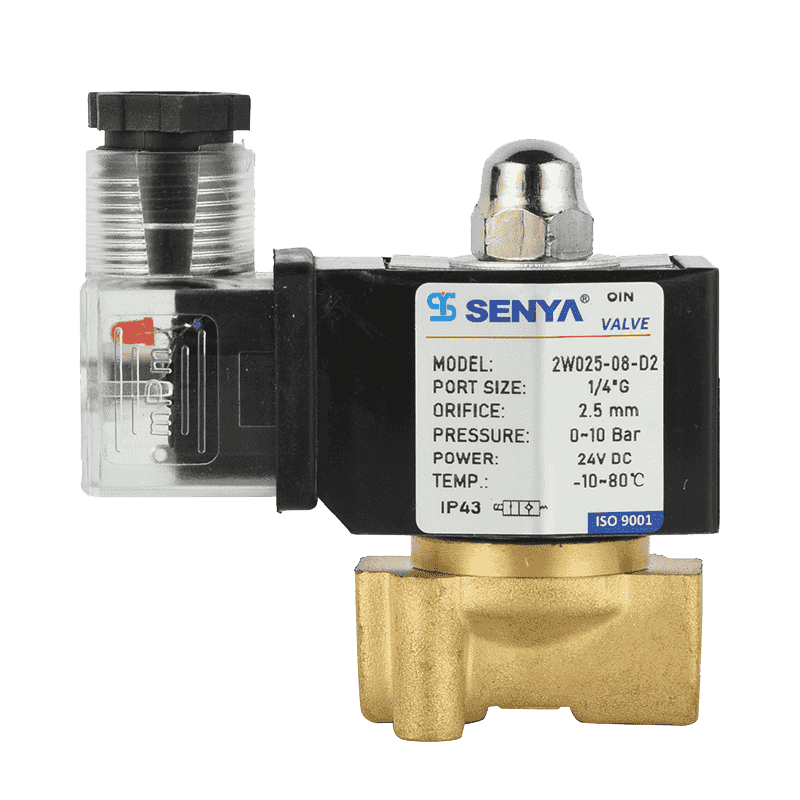
.png?imageView2/2/w/326/h/326/format/jpg/q/75)
.png?imageView2/2/w/326/h/326/format/jpg/q/75)
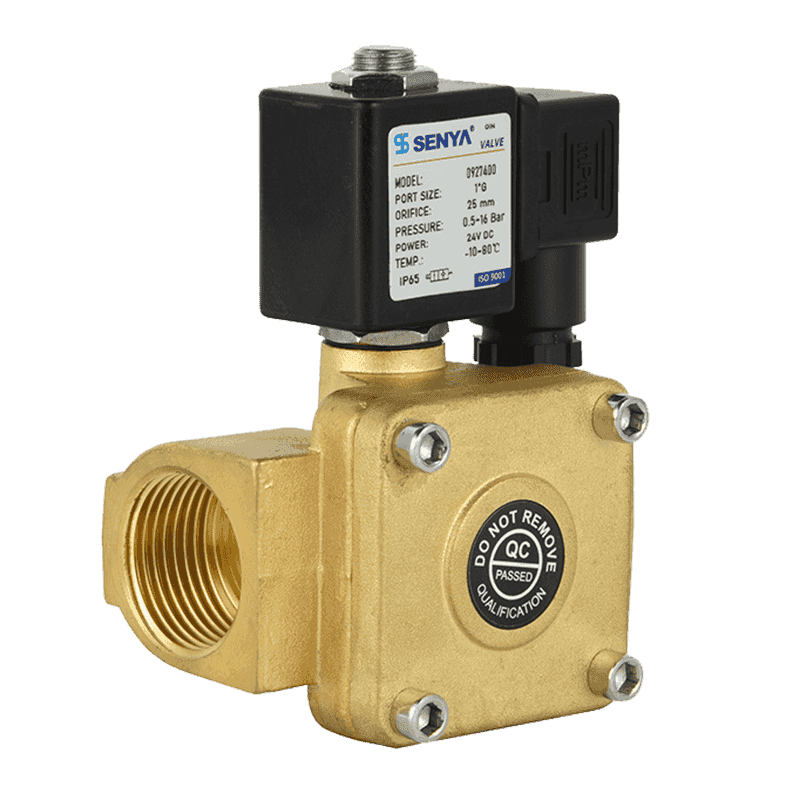
.png?imageView2/2/w/326/h/326/format/jpg/q/75)