
 简体中文
简体中文 English
 Русский
Content
- 1 2-Way vs 3-Way vs 5-Way Solenoid Valves: The Core Difference
- 2 How a Solenoid Valve Works
- 3 2-Way Solenoid Valve Explained
- 4 3-Way Solenoid Valve Explained
- 5 5-Way Solenoid Valve Explained
- 6 Comparing Response Time and Port Count
- 7 Application Risks From Choosing the Wrong Valve
- 8 Water Solenoid Valve Considerations
- 9 How to Choose Between 2-Way, 3-Way and 5-Way Valves
- 10 Side by Side Performance Comparison
- 11 Industries and Applications Across Valve Configurations
- 12 About Ningbo SENYA Pneumatic Technology
- 13 Frequently Asked Questions
- 13.1 Q1. Where are the products mainly exported
- 13.2 Q2. How are the goods delivered to customers
- 13.3 Q3. What are the terms of payment
- 13.4 Q4. How is product quality ensured
- 13.5 Q5. What is the production capacity
- 13.6 Q6. Can customized products be made
- 13.7 Q7. What application fields do the products cover
- 13.8 Q8. What products are offered
- 13.9 Q9. Is this a direct manufacturer or a trading company
- 13.10 Q10. How soon can a reply be expected after an inquiry
2-Way vs 3-Way vs 5-Way Solenoid Valves: The Core Difference
The core difference between these three configurations comes down to port count and flow direction control. A 2-way solenoid valve has two ports and simply opens or closes a single flow path, a 3-way solenoid valve adds a third port to exhaust pressure and pilot single-acting devices, and a 5-way solenoid valve uses five ports to direct air in two directions, making it the standard choice for double-acting cylinders. Selecting the correct valve configuration directly affects system architecture, energy consumption and operational longevity, which is why matching port count to the application matters more than most buyers initially expect.
Modern production lines increasingly demand fast actuation response, with many systems now expecting response times in the range of 15 to 30 milliseconds. Deploying the wrong valve configuration, such as installing a lower-capacity 3-way unit where a 5-way valve is actually needed, can lead to sluggish cylinder actuation and measurably reduced throughput. Understanding how each configuration works makes it far easier to avoid this kind of mismatch during system design or replacement planning.
How a Solenoid Valve Works
A solenoid valve uses an electromagnetic coil to move an internal plunger or diaphragm, which opens or closes the flow path inside the valve body. When the coil is energized, the magnetic field pulls the plunger and shifts the valve into its open or alternate flow position, and when power is removed, a spring typically returns the valve to its default rest state. This basic mechanism stays consistent across pneumatic air valves and a water solenoid valve alike, though the wetted materials and seal design differ depending on whether the media is compressed air or water.
Normally Open vs Normally Closed
Most solenoid valves are built as either normally closed, staying shut until energized, or normally open, staying open until energized. This distinction matters for safety and process design, since a normally closed valve is often chosen for applications where flow should stop automatically if power is lost, while a normally open valve suits processes where continuous flow is the safer default state.
2-Way Solenoid Valve Explained
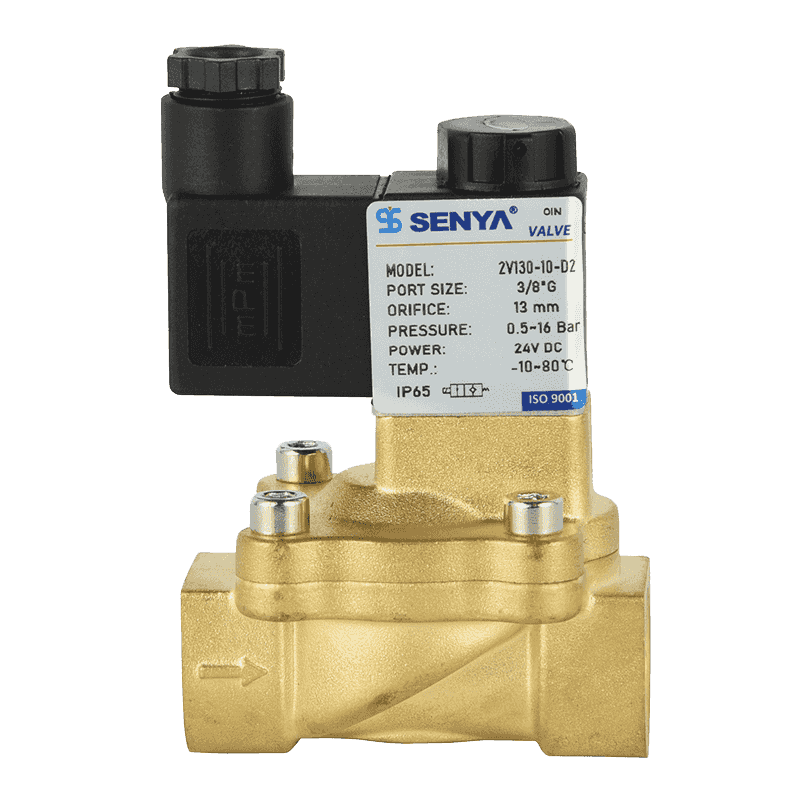
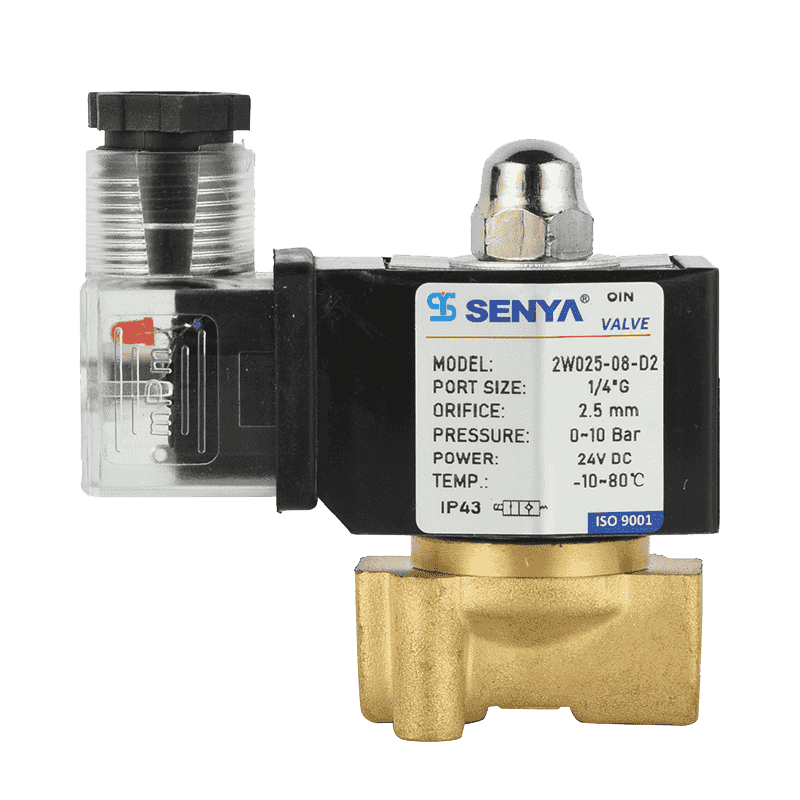
A 2-way solenoid valve, often labeled a 2/2 ways solenoid valve to indicate two ports and two working positions, functions as a straightforward on and off shut-off mechanism. Flow either passes straight through the valve or is fully blocked, with no third port for exhaust or direction switching. This simplicity makes the 2/2 ways solenoid valve the most common choice wherever a system only needs to start or stop a single flow path.
- Cooling water lines that need to start or stop flow to a heat exchanger or jacket
- Irrigation and landscape watering circuits controlling a single supply line
- Basic fluid dispensing systems in food, beverage or washing equipment
- Fill and drain functions on tanks and small reservoirs
Because a water solenoid valve frequently operates in a 2-way configuration, this valve type appears throughout washing machines, cooling devices, agricultural irrigation and general water supply control points where a simple shut-off is the only function required.
3-Way Solenoid Valve Explained
A 3-way solenoid valve introduces a third port dedicated to exhausting pressure, which allows the valve to both supply and release air from a connected device. This structure makes the 3-way valve the industry standard for piloting larger process valves or driving single-acting pneumatic cylinders, where the cylinder extends under air pressure and returns using a spring rather than powered air on both sides.
| Use Point | Function |
|---|---|
| Pilot Operation | Activates larger diaphragm or piston operated process valves |
| Single-Acting Cylinders | Supplies air for extension while allowing spring return exhaust |
| Vacuum Switching | Alternates between vacuum generation and release |
5-Way Solenoid Valve Explained
A 5-way solenoid valve is engineered for more complex pneumatic actuation, using five ports to direct compressed air into either side of a double-acting cylinder while simultaneously exhausting the opposite side. This dual direction control is what allows the cylinder to both extend and retract under powered air rather than relying on a spring for return travel.
Where 5-Way Valves Are Typically Used
- Packaging equipment requiring precise push and retract cycles
- Automated warehousing systems with repeated pick and place motion
- Robotic mobility platforms needing coordinated dual direction actuation
- Production line tooling that must cycle quickly in both directions
Installing a lower-capacity 3-way valve in a position designed for a 5-way unit can reduce production throughput by roughly 10 to 20 percent, since the cylinder loses the powered return stroke and instead relies on a slower spring-driven cycle that was never intended to carry the full workload.
Comparing Response Time and Port Count
Looking at port count alongside typical actuation response time helps illustrate why each configuration fits a different category of task.
Figure 1: Port count comparison across common solenoid valve configurations
Figure 2: Illustrative cycle speed pattern comparing powered dual direction return against spring return
Application Risks From Choosing the Wrong Valve
Misaligning valve configuration with the actual application introduces operational and commercial risk that often shows up well after installation. Incorrect port sizing or inappropriate exhaust management frequently results in excessive backpressure, which accelerates seal wear and raises the risk of blow-by over time. For high-volume manufacturers, keeping the valve failure rate below the common 0.1 percent threshold depends heavily on selecting the correct configuration from the start rather than correcting it later through emergency maintenance.
Figure 3: Illustrative ranking of consequences commonly linked to mismatched valve selection
Water Solenoid Valve Considerations
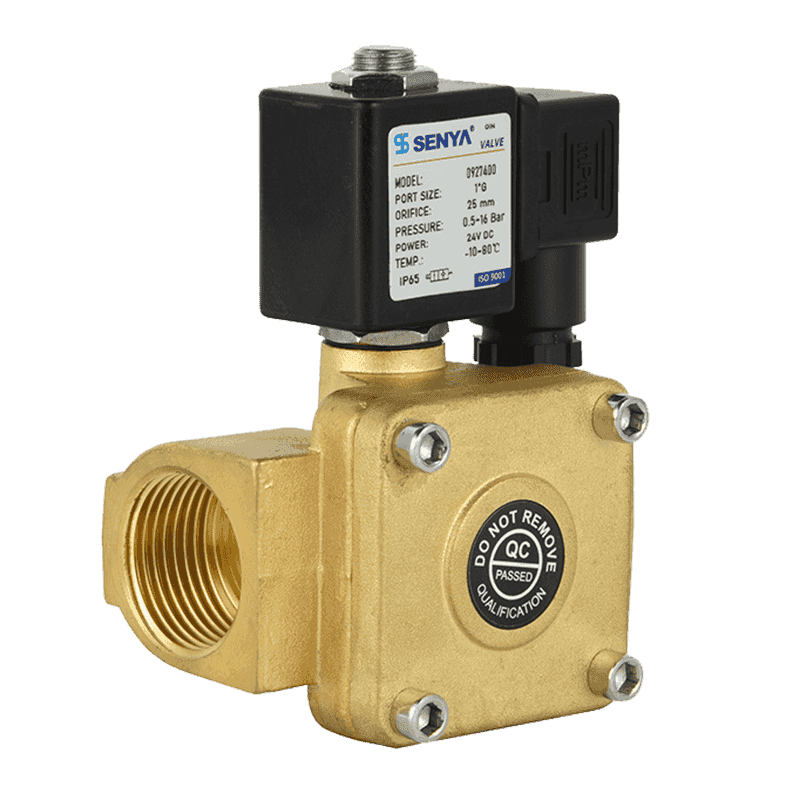
A water solenoid valve shares the same electromagnetic operating principle as an air valve but is built with materials and seals suited to constant water contact, including corrosion resistant bodies and diaphragms designed to handle mineral content and pressure fluctuation without premature wear. These valves appear across washing machines, cooling devices, agricultural irrigation, landscape water features and general building water supply control, almost always in a 2-way or 2/2 ways solenoid valve configuration since most water control tasks only require a simple open and close function.
Selecting the right water solenoid valve involves checking working pressure range, port size, connection thread and whether the application calls for normally open or normally closed operation, since water systems often have different default-safe requirements than compressed air circuits.
How to Choose Between 2-Way, 3-Way and 5-Way Valves
- Identify whether the application only needs simple on and off flow control, which points toward a 2-way or 2/2 ways solenoid valve
- Check whether the connected actuator is single-acting with a spring return, which typically calls for a 3-way valve
- Confirm whether the actuator is double-acting and needs powered movement in both directions, which calls for a 5-way valve
- Match the media type, choosing water rated materials and seals for a water solenoid valve versus standard pneumatic materials for air circuits
- Confirm required response time against the valve specification, especially for high cycle production line applications
- Verify port size and pressure rating align with the existing piping and system pressure to avoid backpressure issues
Side by Side Performance Comparison
Comparing the three configurations across a shared set of practical measures highlights where each option naturally fits best.
Figure 4: Comparative performance across five practical measures on a relative scale
Industries and Applications Across Valve Configurations
| Industry | Typical Valve Role |
|---|---|
| Energy and Petrochemical | Process line shut-off and pilot control |
| Food and Pharmaceutical | Fluid dispensing and washing line control |
| Automated Production Lines | Double-acting cylinder actuation for packaging and handling |
| Agricultural Irrigation | Water solenoid valve flow control across supply lines |
| Dust Removal and Environmental | Pulse valve actuation and filtration system control |
About Ningbo SENYA Pneumatic Technology
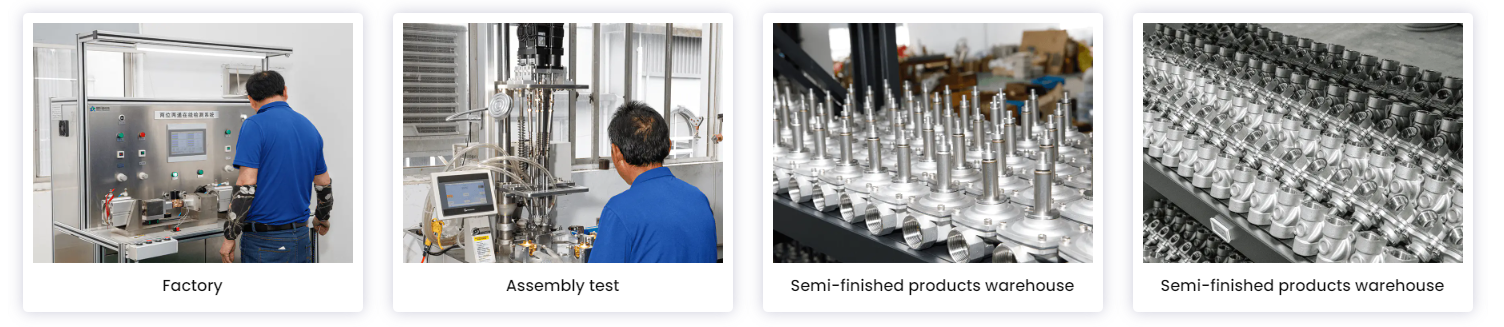
Ningbo SENYA Pneumatic Technology Co., Ltd has focused on producing solenoid valves, cylinders and related pneumatic components since 1994, adhering to a customer value driven approach to product development and manufacturing. The company operates a large-scale precision machinery processing base in China, integrating high concentricity level processing with an automatic digital testing platform to support consistent product performance across each production run.
SENYA produces more than 2,000,000 sets of pneumatic components annually, including cylinders and various valve types, with products exported to over 30 countries including the United States, Turkey, Spain, Italy, Britain, South Korea and Australia. Applications span carwashing, medical sterilizing, automated production lines, mining, dust removal, music fountains, agricultural irrigation, solar projects, agricultural machinery and food processing, supported by a technical development team capable of producing components according to customer drawings or samples.
Frequently Asked Questions
-
Q1. Where are the products mainly exported
Products are mainly exported to the United States, Germany, Japan, Spain, Italy, the United Kingdom, South Korea, Australia, Canada and dozens of other countries.
-
Q2. How are the goods delivered to customers
Shipments usually move by sea, since the factory sits close to Ningbo port, with air freight available through Ningbo and Shanghai airports for urgent orders.
-
Q3. What are the terms of payment
Transaction terms such as FOB, CIF or CNF are confirmed together with the customer at the time of quoting.
-
Q4. How is product quality ensured
Inspection follows each production process, with full inspection of finished products against customer requirements and international standards using an automated high-precision testing platform.
-
Q5. What is the production capacity
The facility runs five production lines with a monthly capacity of around 30,000 valves and various pneumatic products, supported by advanced laboratories and testing systems.
-
Q6. Can customized products be made
Yes, a complete technical development team develops and produces components based on drawings or samples provided by the customer.
-
Q7. What application fields do the products cover
Applications span energy, metallurgy, petrochemical, aerospace, pharmaceutical, food, medical, textile, electronic machinery, environmental protection and irrigation, among other industrial fields.
-
Q8. What products are offered
The main product range includes multiple types of solenoid valve, connectors, reversing valves, cylinders, air source parts and other pneumatic products.
-
Q9. Is this a direct manufacturer or a trading company
The company operates its own factories and production bases alongside an international trade department, handling both production and sales directly.
-
Q10. How soon can a reply be expected after an inquiry
Replies are typically sent within 12 hours after an inquiry is received.
.png?imageView2/2/w/326/h/326/format/jpg/q/75)
.png?imageView2/2/w/326/h/326/format/jpg/q/75)
.png?imageView2/2/w/326/h/326/format/jpg/q/75)
.png?imageView2/2/w/326/h/326/format/jpg/q/75)
.png?imageView2/2/w/326/h/326/format/jpg/q/75)