
 简体中文
简体中文 English
 Русский
A solenoid valve is an electromechanical device that controls the flow of liquids or gases by opening or closing a valve orifice using an electromagnetic coil. It is the most common actuated valve in industrial automation, used in applications ranging from irrigation and medical sterilization to automotive fuel systems and pneumatic machinery. Unlike manual valves, solenoid valves enable remote, fast, and programmable switching—critical for modern production lines. This guide covers their operation, types, material selection, key specifications, maintenance, and answers to frequently asked questions.
Content
How a Solenoid Valve Works
A solenoid valve consists of a solenoid (electromagnetic coil) and a valve body. When electrical current energizes the coil, it creates a magnetic field that moves a plunger or pivoted armature, which in turn opens or closes the valve orifice. The valve returns to its default position by a spring when power is removed. There are two fundamental operating principles: direct-acting and pilot-operated.
Direct-Acting Solenoid Valves
In a direct-acting valve, the solenoid plunger directly lifts the valve seal from the orifice. No differential pressure is required to help open the valve. This makes direct-acting valves ideal for low-pressure or vacuum systems, and they offer the fastest response times. However, they are limited to smaller orifice sizes (typically ≤ 3 mm) because the solenoid must overcome the full fluid pressure force.
Pilot-Operated (Servo-Assisted) Solenoid Valves
Pilot-operated valves use a small pilot orifice to relieve pressure from the top of a diaphragm or piston, allowing the main valve to open. They require a minimum pressure differential (usually 0.2–0.5 bar) to function. In return, they can handle high flow rates (large orifice sizes up to 50 mm or more) with a relatively small coil. They are the most common type for water, steam, and air control in industrial automation.
Qualitative comparison: direct-acting valves excel in response speed; pilot-operated valves in flow capacity; hybrid high-flow pilot valves offer a balanced solution.
Common Solenoid Valve Types by Function
Valves are classified by the number of ports and positions. The most fundamental are 2/2-way (two ports, two positions) and 3/2-way (three ports, two positions). 2/2-way valves are used for simple on/off control of a single fluid line. 3/2-way valves can alternately pressurize and exhaust a line, making them ideal for single-acting cylinders and directional control. Multi-port designs (5/2, 5/3) are common for pneumatic double-acting cylinders.
| Type | Ports / Positions | Primary Function | Common Use |
|---|---|---|---|
| 2/2-way | 2/2 | Open/close flow | Water, gas shut-off, irrigation |
| 3/2-way | 3/2 | Select flow path | Single-acting cylinder control |
| 5/2-way | 5/2 | Reverse flow direction | Double-acting cylinder |
| 5/3-way (closed center) | 5/3 | Hold position | Pneumatic actuators with stop |
When selecting a type, consider whether you need normally-closed (NC) or normally-open (NO) operation. NC valves remain closed when de-energized—they are safer for fail-safe shutdown. NO valves remain open for processes that require continuous flow unless interrupted.
Estimated distribution in industrial automation equipment (based on industry surveys).
Material Selection for Valve Body and Seals
Choosing the right material is critical for reliability, corrosion resistance, and media compatibility. Here we compare common valve body materials:
Brass
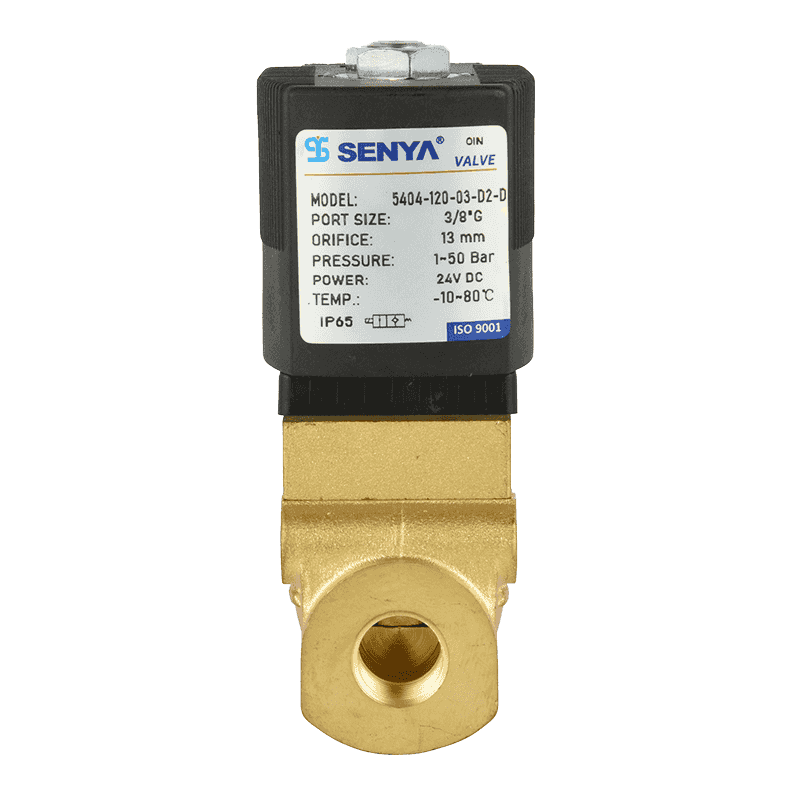
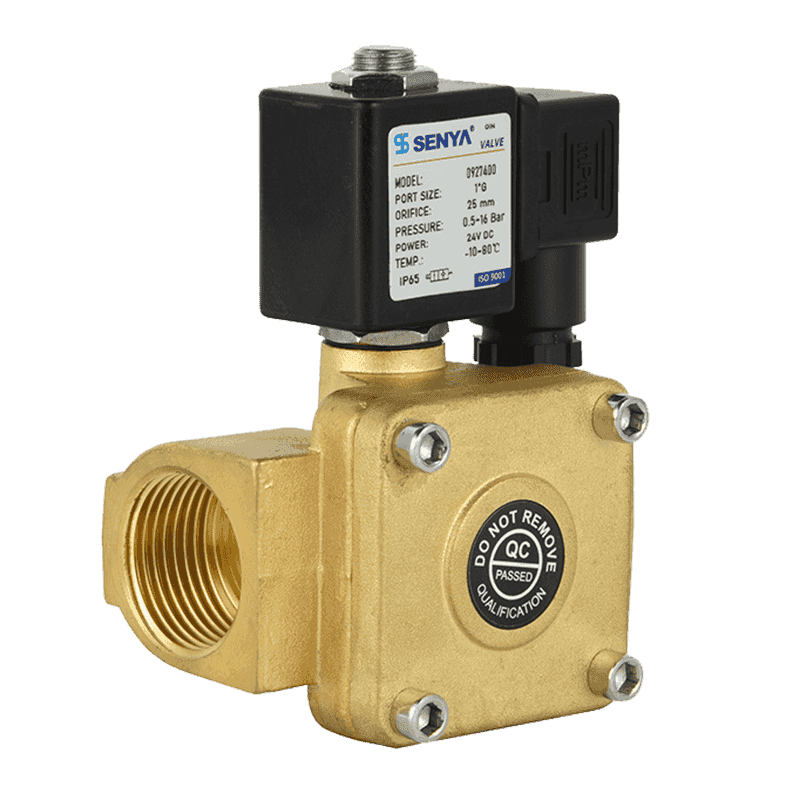
Brass is the most widely used body material due to its good machinability, moderate corrosion resistance, and low cost. It works well with water, air, oil, and non-aggressive gases. Brass solenoid valves are suitable for applications up to 180°C (PTFE seals) and pressures up to 15 bar. For example, the  A large water control 2/2 ways brass solenoid valve with high Impurity tolerance capacityhigh frequency pilot setView Product → from SENYA is a direct-acting type ideal for general-purpose on/off control.
Stainless Steel (SS304/SS316)
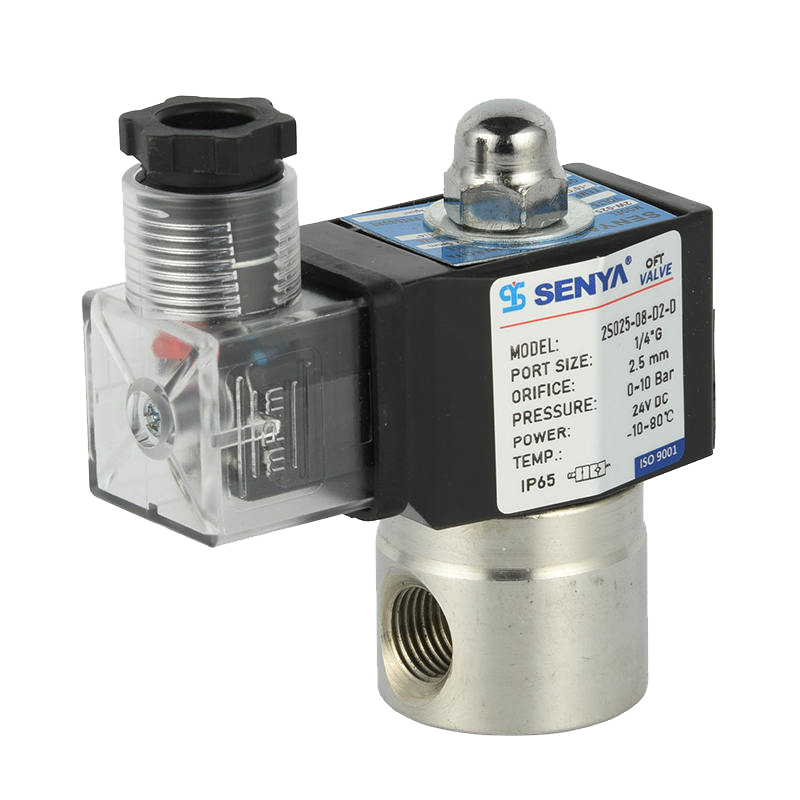
Stainless steel valves offer superior corrosion resistance and are mandatory for aggressive fluids (acids, alkalis, solvents), high-purity processes, and food/medical environments. They typically handle higher temperatures (up to 200°C) and pressures. The  Direct acting 2/2 ways stainless steel acid and alkali resistance normally closed solenoidZero differential pressure startView Product → is frequently chosen for sterilization equipment and chemical dosing systems.
Plastic (PP, PVDF, PTFE)
Plastic-bodied valves are lightweight, cost-effective, and highly resistant to harsh chemicals. They are common in water treatment, electroplating, and swimming pool chlorination. However, they have lower temperature and pressure limits (typically ≤ 060°C, ≤ 10 bar).
Cast Iron & Cast Aluminium
Cast iron is used for large water-control valves (e.g., irrigation mains) where cost and strength matter. Cast aluminium is popular in pulse jet dust collector valves due to its light weight and corrosion resistance in dry environments.
Brass offers balanced performance; SS304 excels in corrosion and temperature; plastic is low-cost but limited in strength.
Key Specifications to Consider Before Buying
Beyond material and valve type, engineers must evaluate several technical parameters to ensure proper operation and long service life. Here are the critical ones:
- Orifice size (Cv / Kv) – Determines flow capacity. Too small restricts flow; too large may cause slow response.
- Pressure range (min/max) – Ensure minimum pilot pressure if using pilot-operated valves. Check maximum rated pressure.
- Media temperature – Valve must tolerate the fluid temperature. Common seal materials: NBR (-10–80°C), EPDM (up to 150°C), PTFE (up to 200°C), FKM (up to 180°C).
- Response time – For high-speed applications (e.g., sorting, packaging), direct-acting valves with opening times < 10 ms are preferred.
- Power consumption – Lower power (e.g., 1 W) is beneficial for battery-operated or energy-saving systems.
- IP rating – For dusty or wet environments, choose at least IP65. For washdown applications, IP67 or IP68.
For a detailed selection guide, refer to our comprehensive article on choosing the right 2/2-way solenoid valve.
Common Failure Modes & Maintenance
The most frequent failure causes are: coil burnout (overvoltage/high temperature), contamination (particles blocking the orifice), seal swelling (incompatible media), and corrosion. Preventive maintenance includes periodic coil resistance check, cleaning the valve interior (especially for media with sediment), and verifying seal integrity. For a step-by-step troubleshooting guide, see our performance analysis of brass solenoid valves in extreme environments.
Applications Across Industries
Solenoid valves are ubiquitous. Below is a summary of typical applications by industry, based on configuration data from global equipment manufacturers.
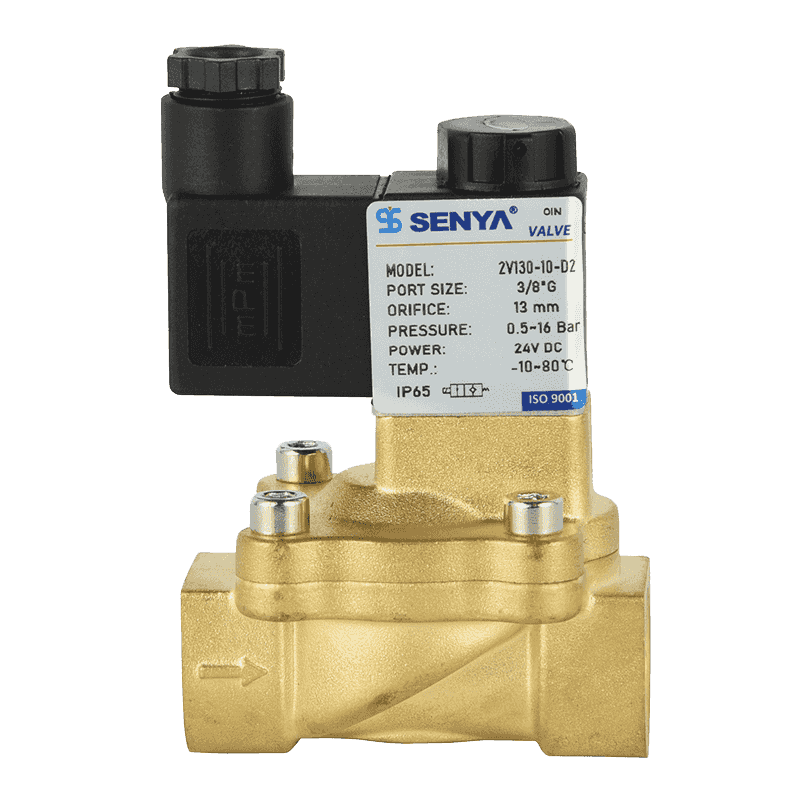
Specifically, pulse solenoid valves are essential for baghouse dust collectors in cement and mining. For such harsh environments, the  Music fountain submerged water column control valve2/2 ways solenoid valve Brass solenoid Thermosetting coil, completely sealed and waterproof, can be immersed in waterView Product → offers IP68 protection and high tolerance to moisture and dust, making it a reliable choice for outdoor or washdown zones.
Frequently Asked Questions About Solenoid Valves
A solenoid valve uses an electromagnetic coil for fast on/off switching (ms range), while motorized valves use an electric actuator for slower, proportional control. Solenoid valves are better for binary open/close tasks.
Standard solenoid valves are designed for on/off service, not proportional throttling. For variable flow, use a proportional solenoid valve or a motorized control valve.
Typical life is 1–10 million cycles depending on design. High-quality valves with proper sealing and clean media can exceed 10 million cycles. Coil burnout reduces life.
Usually due to insufficient voltage, dirt on the armature pole faces, or a faulty coil. Also check the valve's AC/DC compatibility.
Both exist. NC (normally closed) is more common for fail-safe shutoff. NO (normally open) is used when continuous flow is needed and interruption must be triggered.
A pulse solenoid valve is a specialized 2/2-way valve that delivers short, high-pressure bursts to clean filter bags in dust collectors. It requires fast response and high durability.
.png?imageView2/2/w/326/h/326/format/jpg/q/75)
.png?imageView2/2/w/326/h/326/format/jpg/q/75)
.png?imageView2/2/w/326/h/326/format/jpg/q/75)
.png?imageView2/2/w/326/h/326/format/jpg/q/75)
.png?imageView2/2/w/326/h/326/format/jpg/q/75)