
 简体中文
 English
 Русский
Two half-inch solenoid valves, both rated 24 V DC, both fitted to the same mould-temperature circuit. One holds 6 bar for months. The other buzzes, overheats, and starts weeping past the seal inside two weeks. The difference is almost never the label on the coil. It is whether the flow coefficient, the working pressure differential, the seal compound and the duty cycle were checked against the real line conditions.
A solenoid control valve is an electrically operated shut-off or diverting element: energise the coil, the plunger lifts, the orifice opens. Everything after that — sizing, materials, maintenance intervals — depends on matching five things: circuit function, flow coefficient, pressure differential, wetted materials and electrical protection. Get those right and the valve becomes the least interesting component on the machine, which is exactly the result you want.
Content
- 1 How a solenoid control valve opens and closes
- 2 Which circuit function does the job need?
- 3 The four datasheet numbers that predict field success
- 4 Body and seal materials: match the medium, not the catalogue photo
- 5 Where installations go wrong
- 6 A short specification checklist before ordering
- 7 Frequently asked questions
- 7.1 What is the difference between a solenoid valve and a solenoid control valve?
- 7.2 How do I size a solenoid control valve for water?
- 7.3 Why does my solenoid valve not open fully?
- 7.4 Can a brass solenoid valve handle steam?
- 7.5 What is the normal life of a solenoid control valve?
- 7.6 Do I need a normally open valve anywhere?
How a solenoid control valve opens and closes
The construction is simple and has barely changed in decades: a coil, a fixed core, a movable plunger, a return spring, and a seal that sits against the orifice. Current through the coil creates a magnetic field that pulls the plunger up; cut the current and the spring pushes it back down. There is no motor and no gearbox, so the valve is either fully open or fully closed — it is a switching device, not a regulator.
Two designs cover most of the market. A direct-acting valve uses coil force alone to lift the seal, so it works from zero pressure and suits small flow rates and vacuum lines. A pilot-operated valve uses coil force only to open a small pilot orifice, then lets line pressure drive the main diaphragm open — it handles much larger flows in a smaller body, but it needs a minimum pressure differential to open reliably, often around 0.05 MPa and model-dependent. Fit a pilot-operated valve on a gravity-fed tank and it may simply never open.
Normally closed (NC) and normally open (NO) describe the de-energised state. NC is the default for dosing and cooling because a power failure stops the flow; NO is chosen where a failure must not starve a line of cooling water or vent pressure.
Figure 1: Sectional layout of a two-way solenoid control valve — coil force lifts the plunger against the spring, opening the orifice.
Which circuit function does the job need?
Before comparing brands, confirm the port count. A valve bought one function short will be re-ordered within a month.
| Function | Ports | Typical duty | Watch out for |
|---|---|---|---|
| 2/2 normally closed | 2 | Water dosing, cooling, steam injection, irrigation | Coil stays energised for long periods — check duty rating |
| 2/2 normally open | 2 | Fail-open cooling or vent lines | On power loss the line stays open; confirm this is acceptable |
| 3/2 | 3 | Single-acting cylinder extend/retract, purging | Exhaust path must be unobstructed |
| 5/2 | 5 | Double-acting cylinders, valve manifolds | Two exhausts need silencers or a manifold exhaust plate |
| Pulse-jet | 2 | Dust collector bag cleaning | Diaphragm life dominates; air quality decides service life |
The four datasheet numbers that predict field success
Flow coefficient (Cv or Kv). Port size is not capacity. A 1/2-inch direct-acting valve and a 1/2-inch pilot-operated valve can differ by a factor of three in Cv. Size on Cv at the required pressure drop, not on thread size — undersizing shows up as slow actuator strokes and sticky cylinder motion.
Pressure differential window. Datasheets list both a maximum and, for pilot-operated types, a minimum differential. Running below the minimum means the valve will not seal or will chatter; running near the maximum with a hot medium shortens seal life sharply.
Response time. Direct-acting valves switch in the tens of milliseconds; pilot-operated versions are slower because they wait for line pressure to fill the diaphragm chamber. On fast-fill or high-cycle dosing lines, that delay is part of the cycle time calculation.
Duty cycle and insulation class. A continuously energised coil is a heater. Insulation class sets the ceiling on winding temperature, and the difference between classes is not cosmetic.
Figure 2: Maximum winding temperature by insulation class (IEC 60085). A continuously energised Class F coil has little headroom left in a hot cabinet.
Body and seal materials: match the medium, not the catalogue photo
Brass is the workhorse for neutral water, air and light oils — cheap, easy to machine, and available in every port size. Stainless steel (304 or 316) earns its cost in corrosive media, demineralised water, medical sterilisation and food-contact lines, where the higher alloy content also tolerates more cleaning cycles. Engineering plastics handle aggressive chemicals and avoid metal-ion contamination, while cast iron and cast aluminium bodies dominate large water control and dust-collection service.
The seal is where most media problems actually appear. NBR suits water and compressed air; EPDM tolerates hot water and steam; FKM resists many chemicals and higher temperatures; PTFE covers the most aggressive fluids at the cost of some elasticity. A brass valve with the wrong elastomer will fail faster than a stainless valve with the right one.
Figure 3: Qualitative comparison of common body materials, scored from typical construction rather than a single test standard.
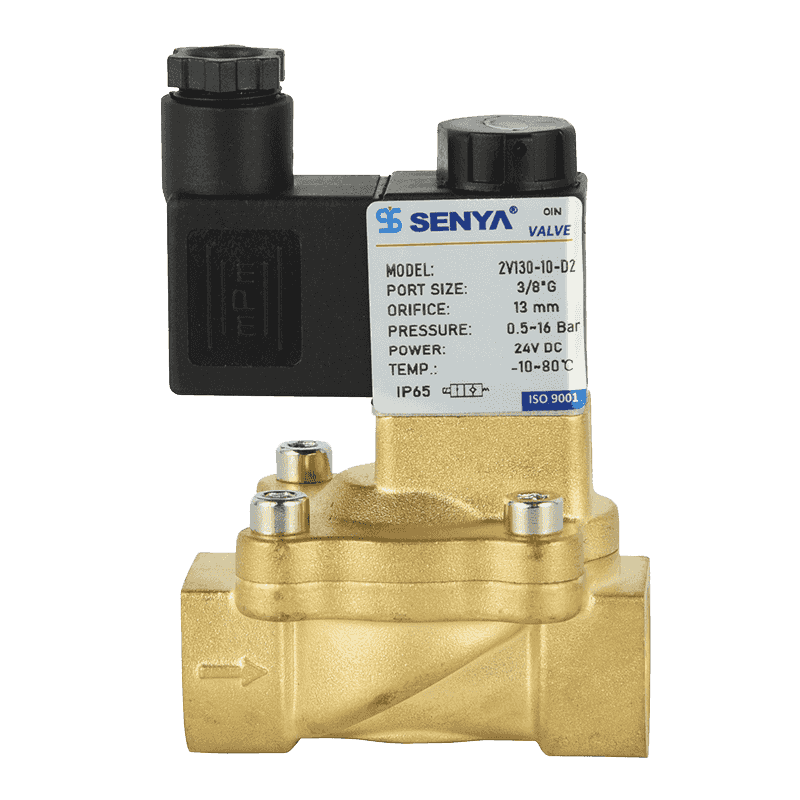
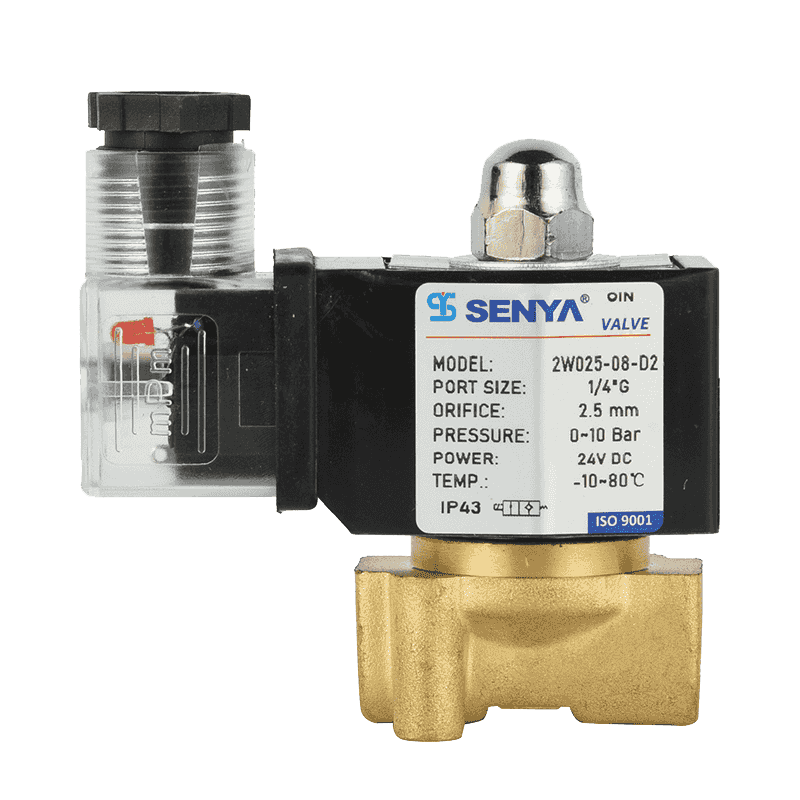
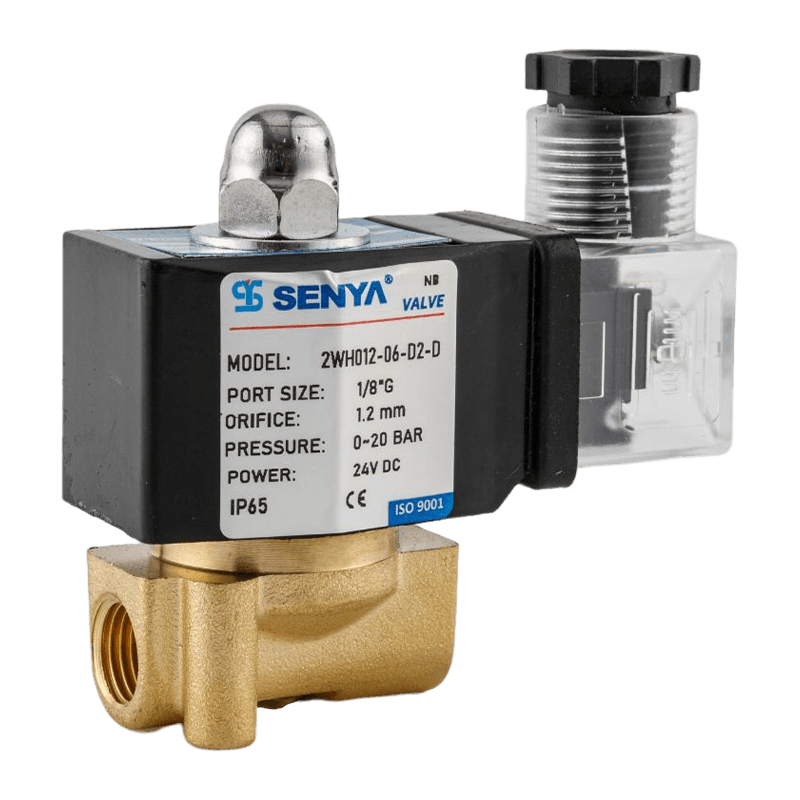
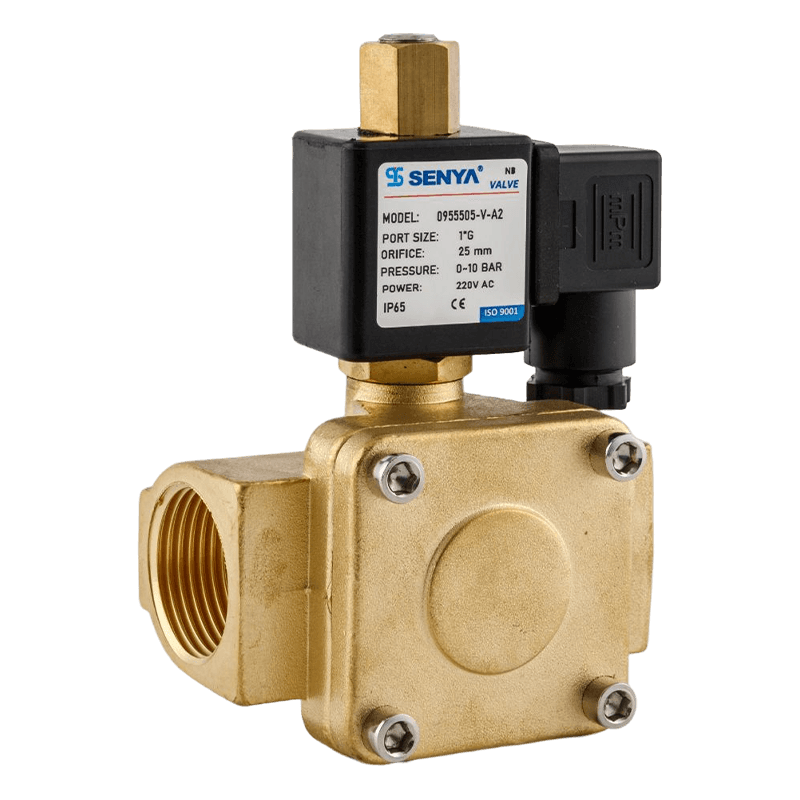
For general-purpose water and air lines in brass, the 2/2-way brass 2W series covers the everyday case across common port sizes. Where the medium turns corrosive or hygiene-sensitive, the same two-way function is available in stainless steel.
 2W Series Brass 2/2-Way Solenoid ValveCovers general-purpose water and air lines with a brass 2W body, high impurity tolerance, zero-pressure start, and port sizes from 1/8 to 2 inches.View Product →
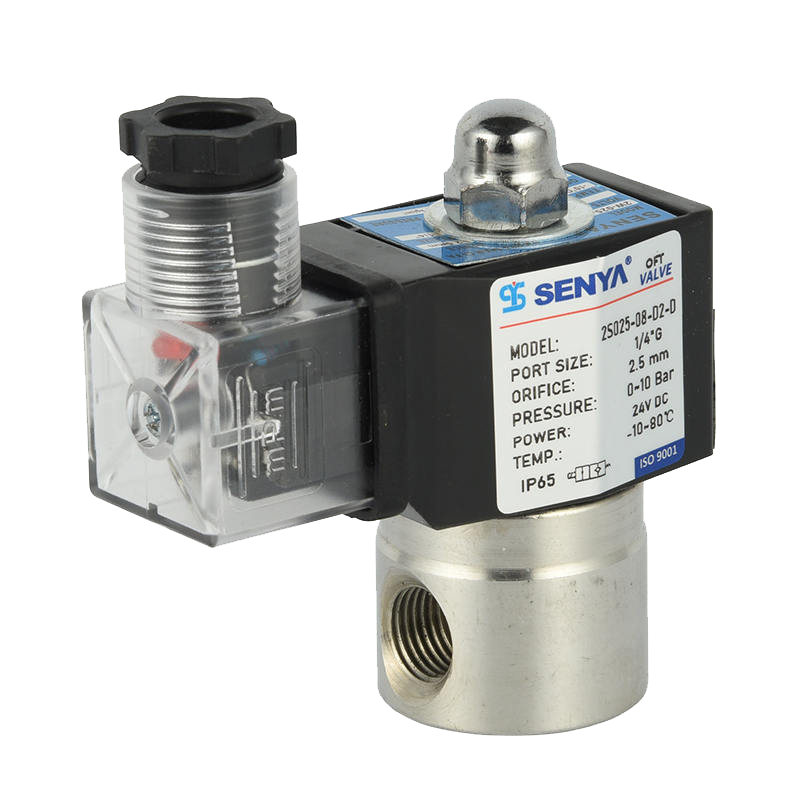
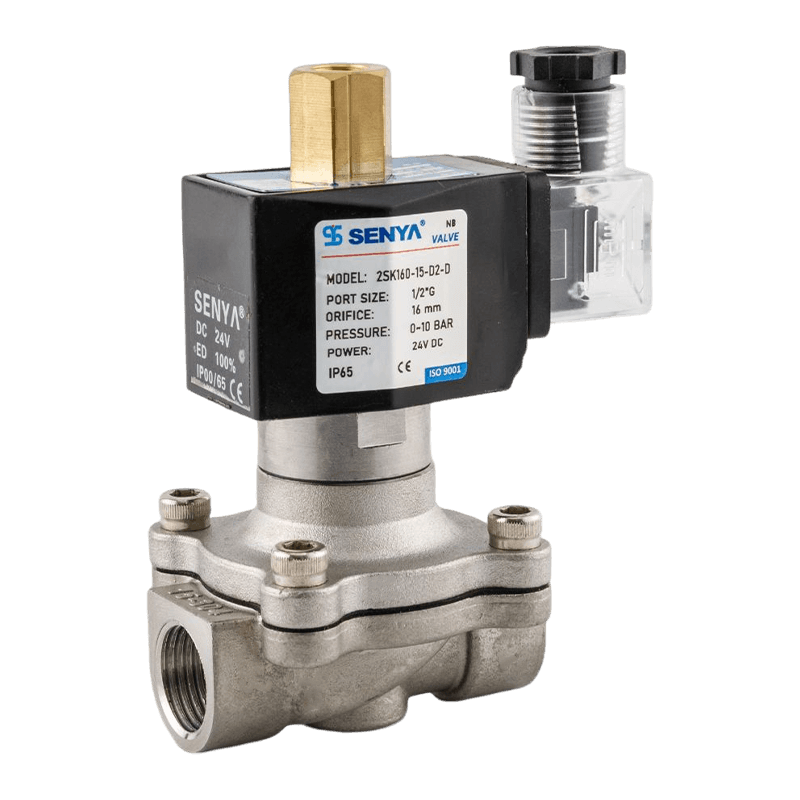
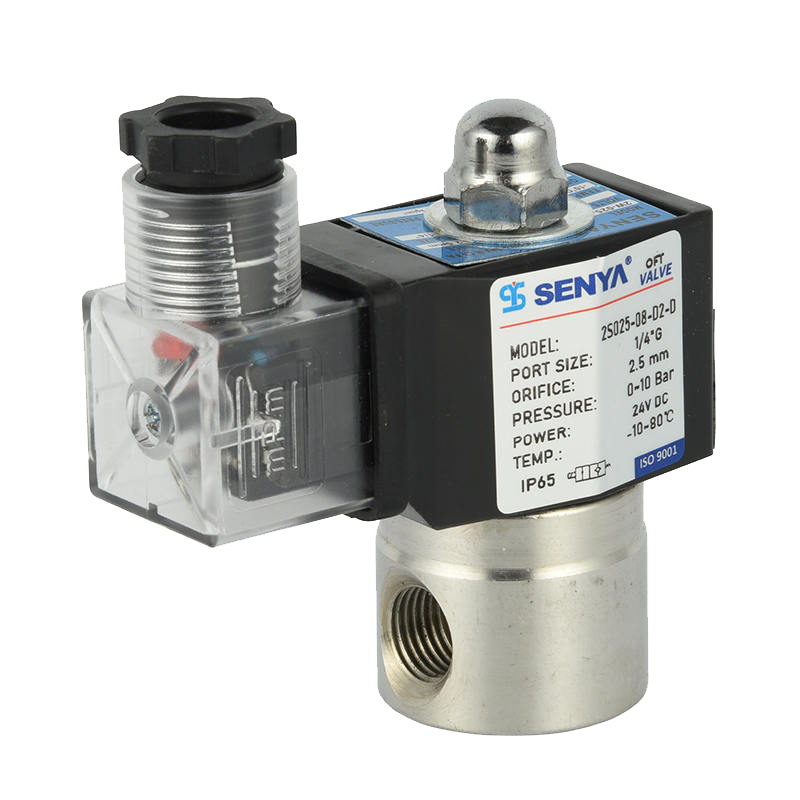 2/2-Way Stainless Steel Solenoid ValvesFor corrosive or hygiene-sensitive media, this category covers 2S direct-acting and 2SK zero-differential-pressure stainless steel valves in normally closed or normally open configurations.View Product →
Where installations go wrong
In service, valve failures cluster around a handful of causes rather than manufacturing defects. A blocked pilot orifice is the classic: iron flake or scale lodges in the pilot passage and the valve stops sealing or stops opening entirely. A 40 µm filter or Y-strainer upstream, cleaned on a schedule, prevents most of it. Coil burnout comes second, usually from sustained undervoltage, a missing snubber on a DC circuit, or continuous energisation of a valve rated for intermittent duty.
- Mount the valve in a position where the coil is not sitting in a pool of condensate.
- Fit a strainer upstream of every pilot-operated valve and check it at each service interval.
- Confirm supply voltage at the coil terminals under load, not at the panel.
- Add surge suppression to DC coils switched by PLC outputs to protect both coil and output.
- On water lines, check for water hammer — a slow-closing valve or an expansion device is cheaper than a new diaphragm.
Dust collection is its own case. Pulse-jet valves fire millions of times over a baghouse's life, so diaphragm quality and air dryness matter far more than the solenoid coil itself. Moist, oily instrument air destroys diaphragms from the inside.
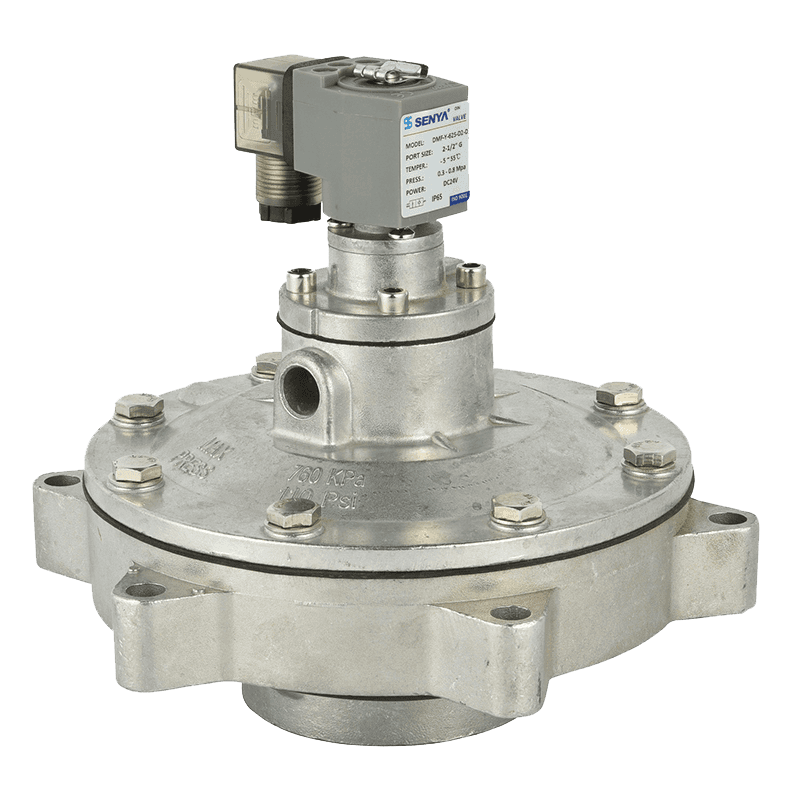 2/2-Way Pulse Solenoid Valves for Dust RemovalCovers DMF-Y submersible long-life and DMF-Z right-angle dust-removal pulse valves, with customizable options for pulsed flow control in dust-collection and fluid or gas systems.View Product →
A short specification checklist before ordering
Write these six lines down and the ordering conversation takes minutes instead of weeks: medium and concentration; required Cv at the working pressure drop; minimum and maximum line pressure; ambient and medium temperature; seal compound; electrical supply, protection rating and duty cycle. Add the connection standard and mounting orientation, and the specification is complete.
If the duty is unusual — high cycling, corrosive media, hygiene requirements, or a manifold that needs to fit an existing footprint — it is worth checking the sizing logic in more depth before the purchase order goes out; this guide on how to choose the right 2/2-way solenoid valve walks through the same parameters with worked examples. For applications that fall outside the standard catalogue, send the line conditions to the engineering team and ask for a recommendation in writing.
Frequently asked questions
What is the difference between a solenoid valve and a solenoid control valve?
The terms are used interchangeably in most catalogues. Both describe an electrically actuated valve that opens or closes a flow path; "control valve" usually signals that the valve is part of a regulating or automation loop rather than a simple manual shut-off.
How do I size a solenoid control valve for water?
Convert the required flow rate and allowable pressure drop into a Cv value, then pick the smallest valve that meets it at your minimum line pressure. Port size alone will often oversize the valve and cause water hammer.
Why does my solenoid valve not open fully?
On pilot-operated types the usual causes are pressure differential below the minimum, a blocked pilot orifice, or a swollen diaphragm. Direct-acting valves usually fail this way because of a stuck plunger or a burnt coil.
Can a brass solenoid valve handle steam?
Brass bodies can, but the seal and the coil insulation usually limit steam service. Specify an EPDM or PTFE seat, a high-temperature coil class, and keep the medium temperature inside the published limit.
What is the normal life of a solenoid control valve?
Life is cycle-based, not calendar-based. Seals and diaphragms are the wear items; clean, dry media and correct electrical supply routinely extend service well beyond the warranty period.
Do I need a normally open valve anywhere?
Use normally open where a power failure must not stop cooling water or must release pressure. Use normally closed wherever a failure should stop flow for safety or to avoid spillage.