
 简体中文
简体中文 English
 Русский
Installing a 2/2 way solenoid valve correctly is the single most important factor in achieving reliable, long-term performance. The short answer: mount it in the correct orientation, match the port size and pressure rating to your system, wire the coil to the specified voltage, and test for leaks before full operation. Miss any of these steps, and you risk premature failure, unsafe pressure buildup, or system downtime. This guide walks you through every step with precision—from selecting the right valve to final commissioning.
Content
- 1 What Is a 2/2 Way Solenoid Valve and How Does It Work?
- 2 Selecting the Right 2/2 Ways Solenoid Valve for Your Application
- 3 Tools and Materials You Will Need
- 4 Step-by-Step Installation Guide
- 5 Common Installation Mistakes and How to Avoid Them
- 6 Maintenance Schedule for Long-Term Performance
- 7 Safety Guidelines for Solenoid Valve Operation
- 8 Frequently Asked Questions
- 9 About Ningbo SENYA Pneumatic Technology Co., Ltd.
What Is a 2/2 Way Solenoid Valve and How Does It Work?
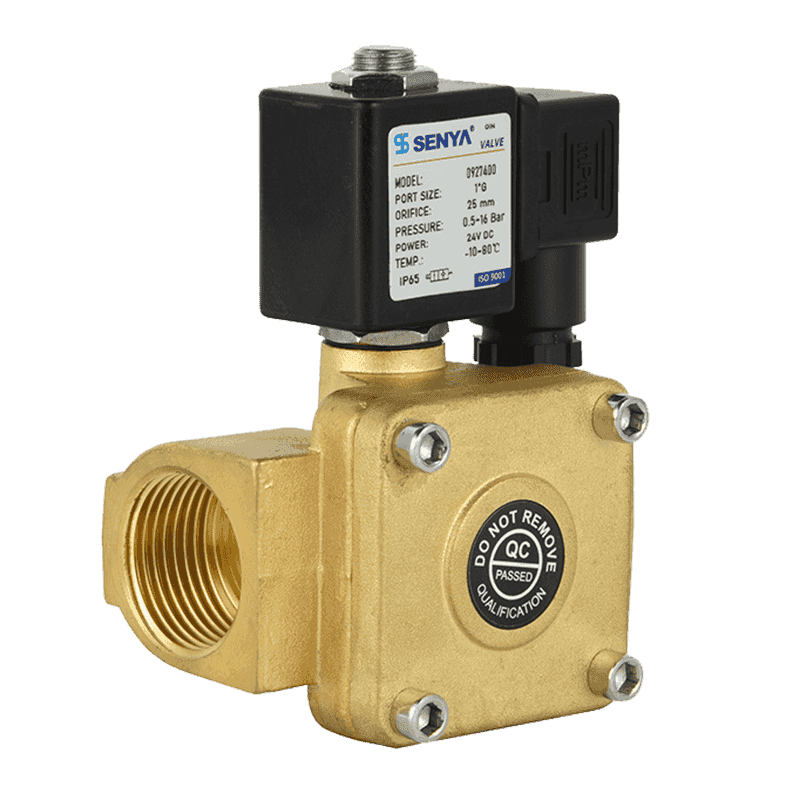
A 2/2 way solenoid valve is a two-port, two-position directional control valve. It has one inlet and one outlet, and it operates in two states: fully open or fully closed. An electromagnetic coil actuates a plunger or pilot, which either allows or blocks fluid flow through the valve body.
These valves are used wherever simple on/off control is required—water solenoid valve applications in irrigation systems, medical sterilizing equipment, car wash systems, dust removal, and automated production lines all rely on this basic principle. They are available in normally closed (NC) or normally open (NO) configurations:
- Normally Closed (NC): Valve is closed when the coil is de-energized; energizing opens flow. This is the most common configuration for safety-critical applications.
- Normally Open (NO): Valve is open when de-energized; energizing stops flow. Preferred where flow must continue during a power failure.
Understanding which type you need before installation prevents costly mistakes.
Selecting the Right 2/2 Ways Solenoid Valve for Your Application
Before touching a wrench, confirm these five parameters match your system requirements:
| Parameter | Typical Range | What to Check |
|---|---|---|
| Operating Pressure | 0–16 bar | Minimum differential pressure for pilot-operated types |
| Fluid Compatibility | Water, air, oil, mild chemicals | Seal material (NBR, EPDM, PTFE, FKM) |
| Coil Voltage | 12V DC, 24V DC, 110V AC, 220V AC | Must match control panel output exactly |
| Orifice / Port Size | 1/8" to 2" (DN4–DN50) | Flow coefficient (Kv/Cv) for required throughput |
| Body Material | Brass, stainless steel, PVC | Corrosion resistance for fluid and environment |
For water solenoid valve applications involving potable water, always verify NSF/ANSI 61 compliance or equivalent food-grade certification. For corrosive environments, stainless steel body valves with PTFE or FKM seals dramatically extend service life—often by 3 to 5 times compared to brass equivalents in the same conditions.
Tools and Materials You Will Need
- Adjustable wrench or pipe wrench (appropriate to port size)
- PTFE thread seal tape or thread sealant compound
- Multimeter (for coil resistance and voltage verification)
- Pressure gauge and isolation valves for testing
- Appropriate electrical cable (rated for coil voltage and current draw)
- Leak detection spray or soapy water solution
- Mounting brackets or valve manifold (if panel mounting)
Step-by-Step Installation Guide
Step 1: Shut Off the System and Depressurize
Always isolate the section of pipe where the solenoid valve will be installed. Close upstream and downstream isolation valves, then bleed off any residual pressure. Confirm the line reads 0 bar on the gauge before proceeding. Skipping this step is the leading cause of installation injuries.
Step 2: Identify Flow Direction
Every solenoid valve body has a flow direction arrow embossed or printed on it. Install the valve so the arrow aligns with the actual flow direction in your pipe. Reversing a direct-acting valve may cause it to fail to open; reversing a pilot-operated valve will almost certainly prevent it from functioning at all. On a water solenoid valve, the inlet port is always the pressure side.
Step 3: Apply Thread Sealant
Wrap PTFE tape clockwise (when viewed from the thread end) around the male threads—3 to 4 wraps is sufficient for most NPT and BSP connections. Avoid over-wrapping, which can crack plastic valve bodies. For stainless steel valves with fine threads, a liquid thread sealant compatible with your fluid is often more reliable than tape alone.
Step 4: Mount the Valve in the Correct Orientation
The coil must face upward or be oriented horizontally—never mount the coil pointing downward. A downward-facing coil traps heat, shortens coil life significantly (some studies show up to 40% reduction in coil lifespan), and allows condensation to enter the electrical housing. For 2/2 ways solenoid valve installations in outdoor or washdown environments, ensure the coil housing IP rating (typically IP65 or IP67) faces away from direct water jets.
Tighten port connections to manufacturer-specified torque. For a 1/2" NPT brass valve, this is typically 20–25 Nm. Over-tightening strips threads; under-tightening causes leaks.
Step 5: Electrical Wiring
Before wiring, verify coil resistance with a multimeter. A healthy 24V DC coil typically reads between 15 and 40 ohms. A reading near zero indicates a short; infinite resistance indicates an open circuit—replace the coil before installation.
- Connect the supply wire to the coil terminal marked "+" or "L" (live).
- Connect the neutral/ground wire to the remaining terminal.
- For AC coils, polarity does not matter; for DC coils, observe correct polarity.
- Use cable glands rated for the environment's IP class to seal entry points.
- Do not exceed the coil's rated duty cycle—most standard coils are rated for 100% continuous duty, but verify this on the product datasheet.
Step 6: Leak Test and Commissioning
Slowly restore system pressure while monitoring port connections with leak detection spray. No bubbles should appear. Energize the coil and confirm the valve actuates—listen for the audible click of the plunger. Check that flow starts (NC valve) or stops (NO valve) as expected. Hold pressure for at least 5 minutes at operating conditions before declaring the installation successful.
Common Installation Mistakes and How to Avoid Them
Top Causes of Solenoid Valve Failure After Installation (%)
Figure 1: Distribution of solenoid valve installation failure causes (field data estimate)
Pilot-operated valves need minimum differential pressure. If your system runs below the minimum required delta-P (often 0.5 bar), choose a zero-differential or direct-acting solenoid valve instead. Pilot-operated types will not open reliably at very low or zero pressure.
Never run a solenoid valve coil without fluid flowing through it for extended periods in direct-acting types. The fluid helps cool the plunger assembly. Dry-running can overheat internal seals within minutes.
Always install a Y-strainer or filter upstream of any solenoid valve. Particle contamination is the primary cause of valve seat leakage in water solenoid valve installations—a 60-mesh (250 micron) strainer upstream dramatically extends service life.
Maintenance Schedule for Long-Term Performance
A properly maintained solenoid valve can deliver over 1,000,000 actuation cycles before requiring seal replacement. Follow this basic schedule:
Maintenance Interval Guide
Monthly
Visual inspection, leak check
Quarterly
Strainer cleaning, coil check
Annually
Full disassembly, seal replacement
Every 3–5 Years
Full valve or coil replacement
Figure 2: Recommended maintenance intervals for 2/2 ways solenoid valves
When replacing seals, always use the manufacturer's official seal kit for your valve model. Generic seals may differ by as little as 0.2mm in cross-section—enough to cause immediate leakage at operating pressure.
Safety Guidelines for Solenoid Valve Operation
- Never exceed the rated maximum pressure marked on the valve body. Operating above this rating risks catastrophic body failure.
- For steam or high-temperature media (above 90°C), use valves specifically rated for high-temperature service with appropriate seal materials (PTFE or FKM).
- In hazardous or explosive atmospheres, use ATEX-certified coils and housings only.
- Install a pressure relief valve downstream whenever there is any possibility of pressure surge or water hammer—common in rapid-cycling water solenoid valve applications.
- Always de-energize and depressurize before performing any maintenance or disassembly.
Frequently Asked Questions
About Ningbo SENYA Pneumatic Technology Co., Ltd.
Ningbo SENYA Pneumatic Technology Co., Ltd. is an integrated manufacturing and export enterprise and a professional China 2/2 Ways Solenoid Valve Manufacturers and water solenoid valve factory. With a focus on producing valves, cylinders, and pneumatic-related products, SENYA has built a high brand reputation backed by rich industrial application experience.
Since 1994, SENYA has adhered to the principle of "Customer Value Implementation" in product development and manufacturing. Our high corrosion-resistant stainless steel valves are produced using advanced high-concentricity processing and a precision automatic digital testing platform, ensuring the consistency and stability of every product.
2,000,000+
Pneumatic components produced annually
30+
Countries exported to worldwide
Since 1994
Decades of engineering expertise
As a large-scale professional production base in China, SENYA integrates a precision machinery processing plant targeting the high and mid-end markets. Products are exported to over 30 countries including the United States, Turkey, Spain, Italy, Britain, South Korea, Australia, Mexico, and many more.
SENYA's product applications span car washing, medical sterilizing, automated production lines, mining, dust removal, music fountains, agricultural irrigation, solar projects, food processing, and beyond. SENYA has become an indispensable automation components supplier for clients across the globe.
SENYA also actively contributes to society by advocating green products and sustainable manufacturing, playing a meaningful role in protecting the environment and reducing the greenhouse effect. As an R&D and manufacturing company, SENYA remains committed to producing all kinds of pneumatic components that fulfill clients' product demands and application solutions.
.png?imageView2/2/w/326/h/326/format/jpg/q/75)
.png?imageView2/2/w/326/h/326/format/jpg/q/75)
.png?imageView2/2/w/326/h/326/format/jpg/q/75)
.png?imageView2/2/w/326/h/326/format/jpg/q/75)
.png?imageView2/2/w/326/h/326/format/jpg/q/75)