
 简体中文
简体中文 English
 Русский
The bottom line: a 2/2 ways solenoid valve is the most practical and widely deployed fluid control device for on/off switching in industrial pipelines. Driven by electromagnetic force, it opens or closes a single flow path with millisecond-level response, no manual intervention, and reliable repeatability across millions of cycles. Whether you are designing an automated irrigation system, a medical sterilization line, a car wash station, or an industrial dust removal unit, understanding these ten fundamentals will help you select, install, and maintain the right solenoid valve for your application.
Content
- 1 1. What a 2/2 Ways Solenoid Valve Actually Does
- 2 2. The 2/2 Way Solenoid Valve Working Principle: Direct-Acting vs. Pilot-Operated
- 3 3. Normally Closed vs. Normally Open: Choosing the Safe Default State
- 4 4. Body Material Selection: Brass, Stainless Steel, and Cast Iron
- 5 5. Pressure and Temperature Ratings: Know Your Operating Envelope
- 6 6. IP Protection Ratings: Matching the Valve to Its Environment
- 7 7. Application Range: Where 2/2 Ways Solenoid Valves Are Actually Used
- 8 8. About SENYA: Professional 2/2 Solenoid Valve Suppliers Since 1994
- 9 9. 2/2 Way Solenoid Valve Installation: Step-by-Step for Correct Mounting
- 10 10. Solenoid Valve Coil Life and Maintenance: Maximizing Uptime
- 11 Frequently Asked Questions
1. What a 2/2 Ways Solenoid Valve Actually Does
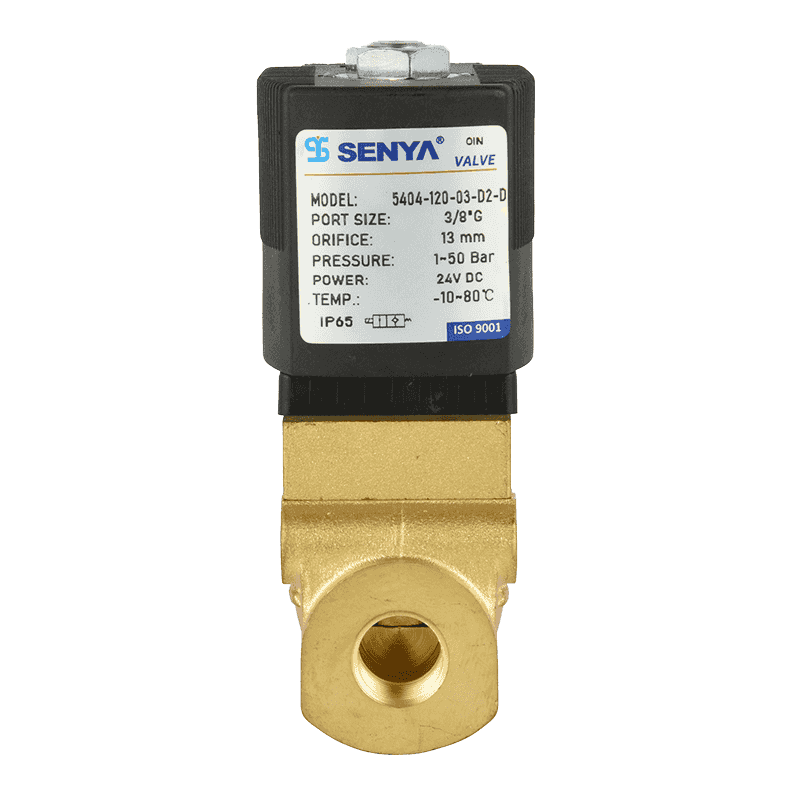
The designation "2/2" describes the valve's fundamental architecture: 2 ports and 2 positions. One port is the inlet, one is the outlet, and the valve switches between fully open and fully closed — nothing in between. This makes it the definitive on/off control device for fluid systems, also referred to as a fluid control valve or process control valve in industrial documentation.
The solenoid — an electromagnetic coil wound around a steel tube — generates a magnetic field when energized. This field pulls a plunger (armature) upward against spring force, lifting the valve seat and allowing media to flow. When power is cut, the spring returns the plunger to its resting position, sealing the seat and stopping flow. This cycle can repeat hundreds of thousands of times without mechanical wear that would affect switching accuracy.
Common media controlled by 2/2 ways solenoid valves include water, steam, compressed air, neutral gases, light oils, and specialty chemical fluids — provided the valve body material and seal compounds are matched to the medium's chemical properties and temperature range.
2. The 2/2 Way Solenoid Valve Working Principle: Direct-Acting vs. Pilot-Operated
The 2/2 way solenoid valve working principle splits into two fundamental operating modes. Choosing the wrong mode for your application is one of the most common specification errors in fluid control system design.
Direct-Acting Solenoid Valves
The electromagnetic force acts directly on the valve seat without assistance from the line pressure. This design works reliably from zero differential pressure up to the valve's rated maximum, making it essential for vacuum service, low-pressure systems, and applications where inlet and outlet pressures are equal. The trade-off is that direct-acting valves require a more powerful solenoid for larger orifice sizes, which increases coil energy consumption and physical size.
Pilot-Operated (Servo-Assisted) Solenoid Valves
A small pilot orifice is opened by the solenoid, allowing line pressure to act on a diaphragm or piston that opens the main valve seat. This amplification effect allows a small, low-power solenoid to control large-diameter orifices. The critical requirement: a minimum differential pressure of 0.3 to 0.5 bar must be maintained across the valve at all times. Pilot-operated designs fail to open reliably below this threshold.
| Feature | Direct-Acting | Pilot-Operated |
|---|---|---|
| Minimum operating pressure | 0 bar (vacuum capable) | 0.3–0.5 bar differential |
| Orifice size range | Small (typically up to DN25) | Small to large (up to DN100+) |
| Power consumption | Higher per orifice size | Lower per orifice size |
| Vacuum service | Yes | No |
| Typical applications | Medical, laboratory, vacuum lines | Irrigation, industrial water, HVAC |
3. Normally Closed vs. Normally Open: Choosing the Safe Default State
Every 2/2 ways solenoid valve is designed with a default position — the state it holds when the coil is de-energized. This is one of the most safety-critical specifications in fluid control system design and is often overlooked until a power failure exposes the wrong choice.
- Normally Closed (NC): The valve is closed when the coil is off. Flow only occurs when power is supplied. This is the correct choice for applications where an uncontrolled flow event during a power outage would cause damage, contamination, or safety hazards — such as chemical dosing, fire suppression bypass lines, or medical fluid delivery.
- Normally Open (NO): The valve is open when de-energized. Power is required to stop flow. This is appropriate for cooling water circuits, process lines where flow interruption during a power failure would overheat equipment, or fail-safe bypass applications.
In practice, normally closed valves account for approximately 70–80% of industrial solenoid valve installations because most safety analyses favor stopping flow as the fail-safe condition. Always conduct a failure mode analysis before committing to either configuration.
4. Body Material Selection: Brass, Stainless Steel, and Cast Iron
The valve body material determines chemical compatibility, temperature resistance, pressure rating, and service life. Selecting the wrong material is the leading cause of premature valve failure in corrosive or high-temperature service. The three primary materials for 2/2 ways solenoid valves are:
Brass
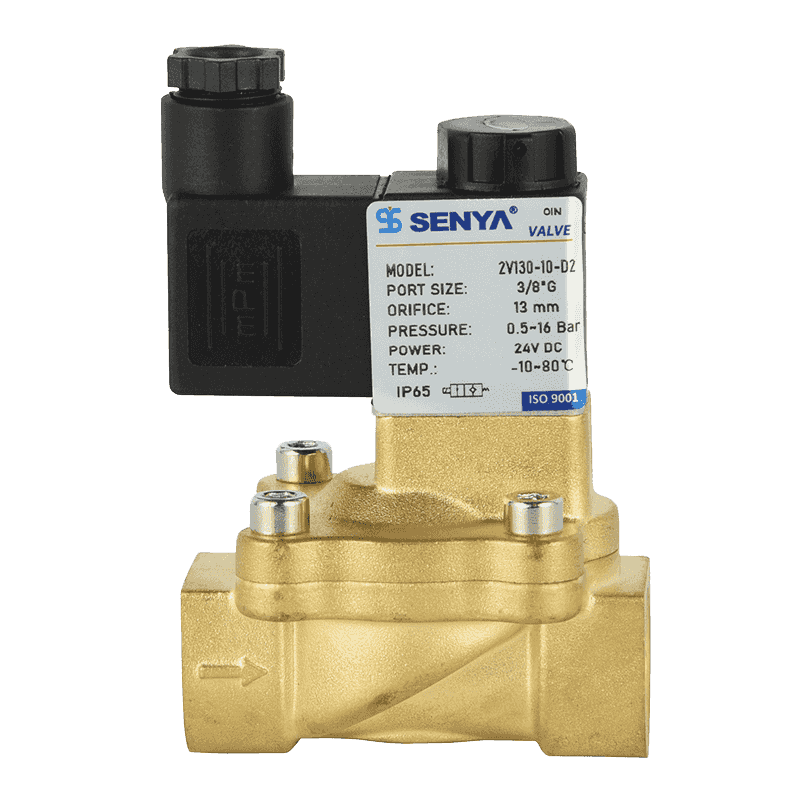
The most widely used material for water solenoid valves and compressed air service. Brass provides good machinability, moderate corrosion resistance, and cost efficiency. It is suitable for water, neutral gases, light oils, and steam at moderate temperatures. Not appropriate for ammonia, seawater, or highly acidic or alkaline media.
Stainless Steel
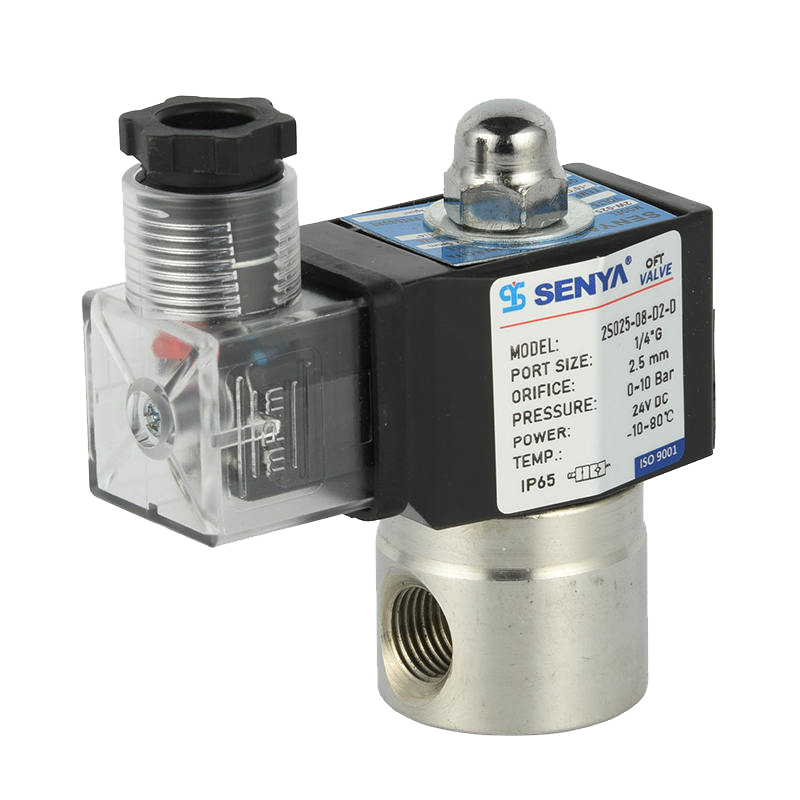
316L stainless steel is the standard for corrosive media, food-grade applications, pharmaceutical processing, and seawater service. High corrosion-resistant stainless steel bodies with precision high-concentricity machining maintain dimensional accuracy and leak-tightness over extended service cycles in aggressive environments. Stainless steel valves also handle higher temperatures than brass, typically rated to 180–200°C depending on seal material.
Cast Iron
Cast iron bodies are used for larger bore sizes in water treatment, HVAC, and steam distribution where the media is not chemically aggressive but the flow volumes require larger, heavier valve bodies. Cast iron is not suitable for corrosive or food-grade applications without protective lining.
5. Pressure and Temperature Ratings: Know Your Operating Envelope
Operating outside a solenoid valve's rated pressure and temperature envelope is the fastest path to seal failure, coil burnout, or body rupture. Before specifying any solenoid valve, confirm four parameters: maximum operating pressure, minimum operating pressure (critical for pilot-operated designs), maximum media temperature, and maximum ambient temperature around the coil.
A well-engineered solenoid valve product range covers a wide operating envelope. SENYA valves, for example, offer a temperature range from -20°C to 200°C (-4°F to 392°F) and a pressure range from micro vacuum to 200 bar (4,351 psi) — a span that covers the vast majority of industrial, agricultural, and infrastructure fluid control scenarios without requiring custom engineering.
Key rules for pressure and temperature specification:
- Always specify the maximum system pressure at the valve inlet — not the average operating pressure
- Account for pressure surges (water hammer) in liquid systems, which can produce instantaneous pressures 2 to 5 times the steady-state system pressure
- For steam service, use saturated steam tables to confirm temperature at the actual operating pressure — not ambient conditions
- Coil temperature ratings and media temperature ratings are independent — a valve may handle 200°C media with a coil rated only to 120°C ambient; confirm both
6. IP Protection Ratings: Matching the Valve to Its Environment
The IP (Ingress Protection) rating defines how well the solenoid coil and electrical connections resist solid particle and water ingress. Selecting the correct IP rating for the installation environment is as important as selecting the correct body material. Using an under-rated valve in a wet or dusty environment leads to coil failure, electrical shorts, and unplanned downtime.
| IP Rating | Solid Protection | Water Protection | Typical Environment |
|---|---|---|---|
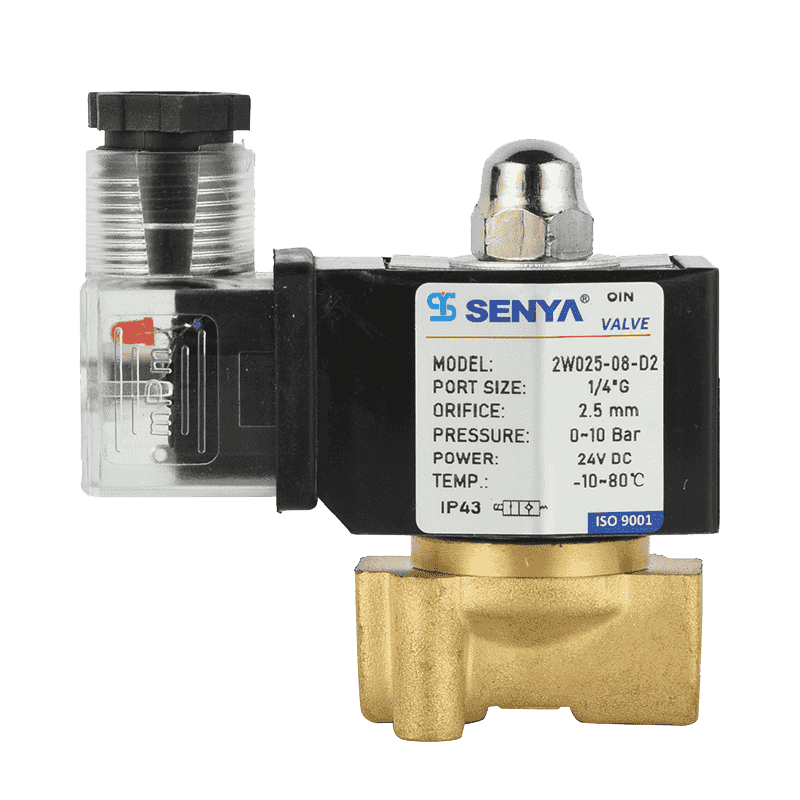
| IP43 | Objects >1 mm | Spraying water up to 60° | Indoor dry/semi-wet, control panels |
| IP65 | Dust-tight | Low-pressure water jets | Outdoor, car wash, agriculture, dust removal |
| IP68 | Dust-tight | Continuous submersion | Underground irrigation, fountain systems, subsea lines |
For outdoor music fountain systems, agricultural irrigation networks, and mining dust suppression applications, IP65 is the practical minimum. For direct-burial or submerged installations, IP68-rated valves are the correct specification.
7. Application Range: Where 2/2 Ways Solenoid Valves Are Actually Used
The breadth of industries relying on 2/2 ways solenoid valves reflects the universality of the on/off fluid control requirement. The chart below illustrates the relative deployment share across major application sectors.
Industrial automation production lines represent the largest single application segment, driven by the need for fast, repeatable on/off control at hundreds of control points simultaneously. Water solenoid valves in agricultural irrigation are the second-largest segment, where remote and timer-controlled operation is essential for efficient water use across large field areas.
8. About SENYA: Professional 2/2 Solenoid Valve Suppliers Since 1994
Ningbo SENYA Pneumatic Technology Co., Ltd. is a professional China 2/2 ways solenoid valve manufacturer and water solenoid valve factory that has been operating since 1994. Guided by the principle of "Customer Value Implementation," SENYA has built a reputation for delivering high-quality pneumatic and fluid control components to industrial clients across more than 30 countries, including the United States, Germany, Turkey, Spain, Italy, the United Kingdom, South Korea, Australia, and Mexico.
SENYA's manufacturing base is a large-scale precision production facility that integrates a precision machinery processing plant targeting the high and mid-end market. Annual production capacity exceeds 2,000,000 sets of pneumatic components including cylinders and valves. The company's high corrosion-resistant stainless steel valves are produced using advanced high-concentricity level processing and verified on a precision automatic digital testing platform to ensure consistency and stability across every production batch.
SENYA's 2/2 ways solenoid valve product line is engineered to cover the full spectrum of fluid control requirements:
- Wide medium compatibility — water, steam, compressed air, neutral gases, light oils, and specialty chemical fluids
- Broad temperature range — -20°C to 200°C (-4°F to 392°F) covering cryogenic to high-temperature steam service
- Pressure capability — from micro vacuum to 200 bar (4,351 psi) for both low-pressure and high-pressure system designs
- IP protection levels — IP43, IP65, and IP68 options to match indoor, outdoor, and submerged installation environments
- Body materials — brass, stainless steel, and cast iron to suit diverse chemical compatibility and cost requirements
- OEM/ODM customization — professional technical project support and custom product solutions for specific application requirements
SENYA's application coverage spans carwashing, medical sterilization, automated production lines, mining and dust removal, music fountains, agricultural irrigation, solar projects, agricultural machinery, and food processing — confirming its position as a versatile and dependable automation component supplier. The company also maintains a commitment to environmental responsibility, advocating green manufacturing practices and contributing to greenhouse gas reduction through efficient product design.
With professional technical project support, high-quality product performance, and 24-hour after-sales service, SENYA provides end-to-end support for fluid control system engineers and procurement teams from specification through commissioning and beyond.
9. 2/2 Way Solenoid Valve Installation: Step-by-Step for Correct Mounting
Correct 2/2 way solenoid valve installation is the single most controllable factor in achieving rated performance and maximizing service life. A well-specified valve installed incorrectly will underperform and fail early. Follow these steps systematically for every installation.
- Confirm flow direction before mounting. Every solenoid valve body carries an arrow indicating the correct flow direction from inlet to outlet. Installing the valve backwards is one of the most frequent installation errors and causes either complete failure to open or uncontrolled internal leakage past the seat.
- Mount with the coil in the upright or horizontal position. The solenoid coil should point upward or be installed horizontally. Avoid downward-pointing coil installations — condensation inside the coil housing accelerates electrical insulation degradation and coil failure.
- Install a strainer upstream of the valve. Particulate contamination in the media is the leading cause of seat wear and valve failure to close fully. A 60–80 mesh strainer upstream of every solenoid valve extends seal life by a factor of 3 to 5 in systems with moderate particulate levels.
- Use appropriate thread sealant on pipe connections. Apply PTFE tape or thread compound to pipe threads before installation. Do not over-apply — excess sealant entering the valve bore can contaminate the seat or block the pilot orifice in pilot-operated designs.
- Verify electrical supply matches the coil specification. Confirm voltage (AC or DC), frequency (50 Hz or 60 Hz for AC coils), and voltage tolerance (typically ±10%) before energizing. Incorrect voltage is the leading cause of immediate coil burnout on first energization.
- Perform a leak test before putting the system into service. After installation, pressurize the system and check all pipe connections and the valve body for external leakage. Verify that the valve closes completely when de-energized by confirming zero downstream flow or pressure build.
- Allow for thermal expansion in high-temperature installations. In steam or high-temperature liquid service, include expansion loops or flexible connectors near the valve to prevent piping stress from distorting the valve body and affecting seat alignment.
10. Solenoid Valve Coil Life and Maintenance: Maximizing Uptime
The solenoid coil is the component most susceptible to degradation over time. Understanding its failure modes and implementing a basic maintenance routine protects the investment and prevents unplanned production stoppages.
Coil life is primarily affected by three factors: operating temperature, duty cycle, and insulation class. A coil operating continuously at or below its rated temperature in a Class H insulation (180°C) design will typically achieve 20,000 to 50,000 hours of service life. Exceeding the rated coil temperature by 10°C can reduce insulation life by approximately 50%, following the Arrhenius rule for thermal degradation.
A simple maintenance schedule for 2/2 ways solenoid valves includes:
- Every 3 months: Clean the upstream strainer; check external pipe connections for weeping; verify that the coil surface temperature is within the expected range using an infrared thermometer
- Every 12 months: Remove and inspect the valve seat and seal for wear or chemical attack; replace seal kit if elastomers show hardening, cracking, or swelling; measure coil resistance and compare to the baseline value recorded at commissioning
- Every 2–3 years or at major overhaul: Replace the complete seal kit regardless of visual condition; verify that valve switching time (open and close) remains within the manufacturer's specification using a pressure transducer and data logger
The chart illustrates how rapidly coil insulation life deteriorates with temperature overrun. Staying within rated operating limits is the single most effective action for extending solenoid valve service life in any installation.
.png?imageView2/2/w/326/h/326/format/jpg/q/75)
.png?imageView2/2/w/326/h/326/format/jpg/q/75)
.png?imageView2/2/w/326/h/326/format/jpg/q/75)
.png?imageView2/2/w/326/h/326/format/jpg/q/75)
.png?imageView2/2/w/326/h/326/format/jpg/q/75)