
 简体中文
简体中文 English
 Русский
Pneumatic push-in fittings are connecting components widely used in pneumatic systems, typically for quickly and conveniently connecting air lines to pneumatic equipment. These fittings have a simple design, are easy to install, offer strong sealing, and allow for quick connection and disconnection without the need for special tools. Therefore, they are widely used in various industries, including automation, machinery manufacturing, automotive, food processing, and packaging. Whether in assembly, maintenance, or equipment upgrades, pneumatic push-in fittings significantly improve work efficiency, reduce downtime, and ensure the stable operation of pneumatic systems.
1. Basic Working Principle of Pneumatic Push-in Fittings
The core feature of pneumatic push-in fittings is "push-in connection," which completes the connection with a simple push. The fitting contains a spring and a rubber sealing ring. When the pipe is inserted, these sealing elements automatically seal, preventing gas leakage. During insertion, the embedded clamping device firmly grips the pipe, ensuring a secure connection and preventing loosening or detachment under high-pressure airflow.
This design gives pneumatic push-in fittings extremely high convenience and reliability, making them particularly suitable for production environments that require frequent disassembly or replacement of equipment.
2. Main Features of Pneumatic Push-in Fittings
Quick Installation and Disassembly
One of the biggest advantages of pneumatic push-in fittings is their extremely simple installation process. No additional tools are required; simply insert the air tube into the fitting and press down slightly to complete the installation. To disassemble, simply press the release button or pull the lock on the fitting to easily remove the pipe. This makes equipment maintenance and replacement very convenient.
High Sealing and Leakage Resistance
Pneumatic push-in fittings use rubber sealing rings and a double-seal design to effectively prevent gas leakage and ensure the airtightness of the system. Even in high-pressure gas and complex working environments, they can still provide reliable sealing performance, reducing gas waste and equipment failures.
High Temperature and Corrosion Resistance
Most pneumatic push-in fittings are made of high-temperature and corrosion-resistant materials, such as stainless steel, brass, or high-pressure resistant plastics, enabling them to withstand high temperatures and corrosive gases in harsh environments. This allows pneumatic quick-connect fittings to be widely used in pneumatic systems across various industries, particularly in the chemical and food processing industries.
Diverse Interface Options
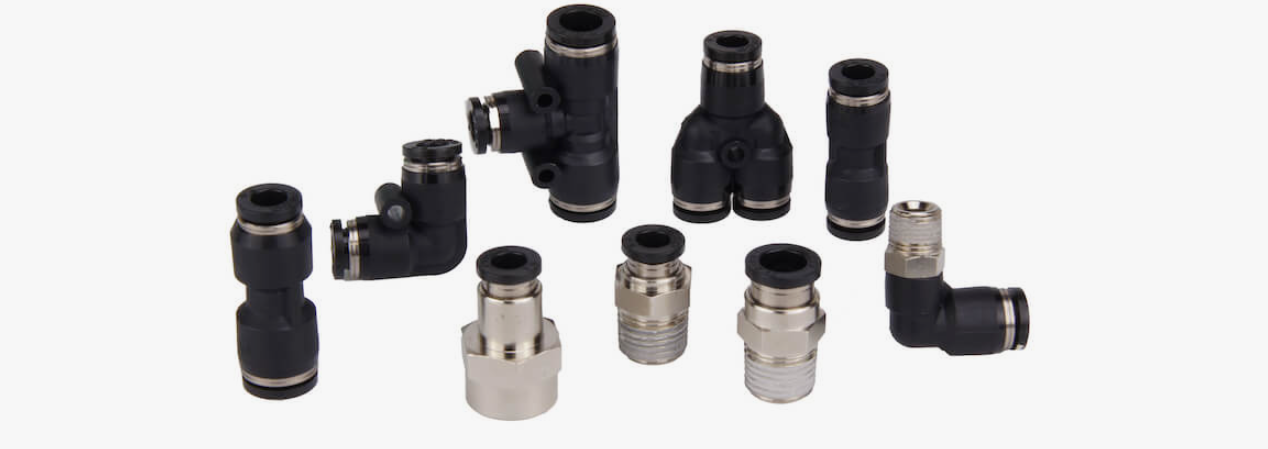
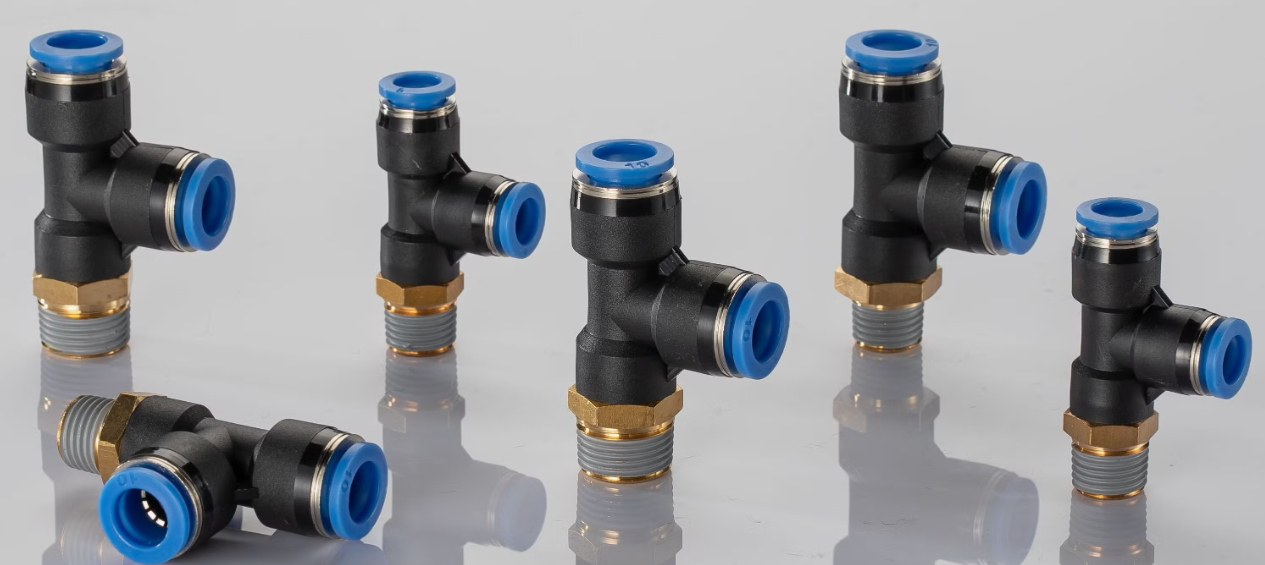
Pneumatic quick-connect fittings come in various types and specifications, compatible with different pipe diameters. Common interface types include straight-through, elbow, tee, and four-way connectors, meeting the needs of different piping layouts. Furthermore, the connection method of pneumatic quick-connect fittings is very flexible, compatible with various pipe materials such as polyvinyl chloride (PVC), polyurethane (PU), and nylon.
Durability and Long-Term Stability
Due to the simple working principle and lack of complex moving parts, pneumatic quick-connect fittings offer high durability and long-term stability. Even with frequent connection and disconnection, they maintain good sealing performance, extending their service life.
3. Application Areas of Pneumatic Quick-Connect Fittings
Due to their easy installation, high-pressure resistance, and good sealing performance, pneumatic quick-connect fittings are widely used in various pneumatic systems. Here are some typical application areas:
Industrial Automation
In automated production lines, pneumatic quick-connect fittings are used to connect pneumatic tools, robotic arms, conveyor belts, and other equipment, ensuring a stable air supply and improving production efficiency.
Automotive Manufacturing
Pneumatic systems play a crucial role in the automotive manufacturing process, and pneumatic quick-connect fittings are widely used in vehicle assembly, testing equipment, and painting systems.
Food and Beverage Industry
Due to their corrosion resistance and ease of cleaning, pneumatic quick-connect fittings have important applications in the food and beverage industry, such as bottling lines, packaging machines, and assembly lines.
Electronics and Electrical Equipment
Pneumatic quick-connect fittings are also commonly found in the assembly and repair of electronic equipment, used to connect air-powered tools and automated assembly lines.
Medical Equipment
Pneumatic quick-connect fittings also have important applications in the pneumatic systems of medical equipment, especially when equipment requires quick assembly, disassembly, and cleaning, offering great convenience.
4. How to Choose the Right Pneumatic Quick-Connect Fitting?
When choosing a pneumatic quick-connect fitting, several factors need to be considered, including working pressure, temperature range, pipe material, and interface type. Different application requirements determine the material and design of the fitting. Generally, stainless steel pneumatic quick-connect fittings are suitable for high-temperature and corrosive environments, while plastic fittings are suitable for light-duty or milder working environments.
In addition, it is necessary to select the appropriate fitting size according to the pipe diameter to ensure a secure connection and prevent air leakage.
5. Frequently Asked Questions (FAQ)
Q1: How do pneumatic quick-connect fittings ensure sealing performance?
Pneumatic quick-connect fittings use a double-seal design and elastic sealing rings or rubber gaskets, which can effectively prevent gas leakage under high pressure conditions and ensure the airtightness of the system.
Q2: How much working pressure can pneumatic quick-connect fittings withstand?
Most pneumatic quick-connect fittings can withstand pressures ranging from 0 to 15 MPa, but the specific pressure capacity depends on the material and design of the fitting. When selecting, ensure that the pressure range of the fitting meets the application requirements.
Q3: What is the service life of pneumatic quick-connect fittings?
Pneumatic quick-connect fittings generally have a long service life, especially under normal working conditions. Regular inspection and replacement of sealing rings can further extend the service life of the fittings.
Q4: Can pneumatic quick-connect fittings be used with different types of pipe materials?
Pneumatic quick-connect fittings usually support various pipe materials, including PVC, PU, nylon, etc. Different types of fittings can meet the needs of different pipe materials, but it is necessary to ensure that the pipe material and fitting specifications match.
Q5: Can pneumatic quick-connect fittings be used in high-temperature environments?
Many pneumatic quick-connect fittings use high-temperature resistant materials, such as stainless steel or high-temperature resistant plastics, and are suitable for use in high-temperature environments. The specific operating temperature range should be selected according to the material and specifications of the fitting.
.png?imageView2/2/w/326/h/326/format/jpg/q/75)
.png?imageView2/2/w/326/h/326/format/jpg/q/75)
.png?imageView2/2/w/326/h/326/format/jpg/q/75)
.png?imageView2/2/w/326/h/326/format/jpg/q/75)
.png?imageView2/2/w/326/h/326/format/jpg/q/75)