
 简体中文
简体中文 English
 Русский
A pneumatic cylinder is a common mechanical device widely used in automation, manufacturing, and various industrial processes. It converts the energy of compressed air into linear mechanical motion, performing tasks such as pushing, pulling, and lifting. Cylinders play a vital role in industrial production, especially in automated production lines, robots, and robotic arms. To ensure efficient and long-term operation, improving cylinder lifespan and efficiency is crucial. This article will explore how to extend cylinder lifespan and improve its working efficiency through proper design, maintenance, and operation.
1. Choosing the Appropriate Cylinder Type and Specifications
When selecting a cylinder, the first step is to choose the appropriate cylinder type and specifications based on the actual working environment and usage requirements. Different types of cylinders are suitable for different applications. Common cylinder types include single-acting cylinders, double-acting cylinders, and telescopic cylinders. Choosing the appropriate cylinder type and size can effectively improve cylinder working efficiency and lifespan.
Cylinder Size Selection: The cylinder size should be determined based on factors such as load requirements, stroke length, air pressure, and operating frequency. Choosing an oversized cylinder may lead to wasted gas; choosing an undersized cylinder may fail to meet load requirements, increasing the cylinder's workload and shortening its lifespan.
Cylinder Type Selection: Single-acting cylinders are suitable for applications requiring unidirectional action, while double-acting cylinders are suitable for applications requiring bidirectional action. Telescopic cylinders are suitable for applications requiring a large stroke but with limited space.
Correct cylinder selection can avoid overload, excessive friction, and unnecessary energy loss, thereby improving cylinder efficiency.
2. Regular Maintenance and Inspection
The lifespan and efficiency of a cylinder largely depend on good maintenance. Regular inspection and maintenance ensure that the cylinder operates in optimal condition, reducing the occurrence of malfunctions.
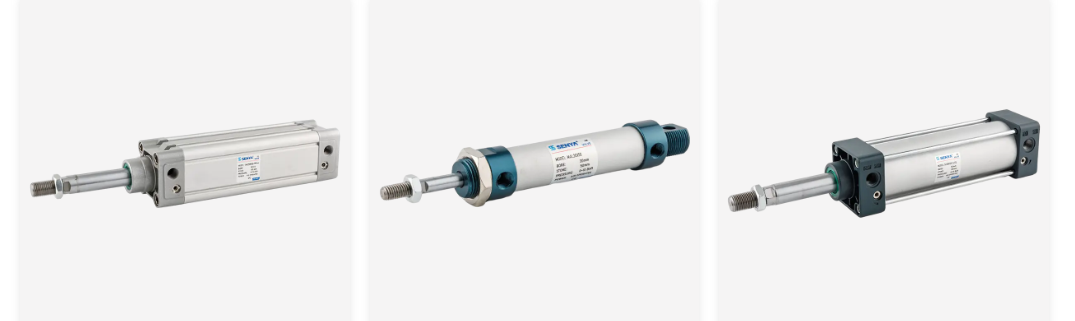
Check Cylinder Sealing Performance: The cylinder's sealing performance is crucial for maintaining air pressure. Regularly check the cylinder seals (such as sealing rings and O-rings) for aging, wear, or leakage. If leakage is found, the seals should be replaced promptly to prevent compressed air loss and reduce energy waste.
Inspect the moving parts of the cylinder: Regularly inspect the piston, piston rod, and guide sleeve for wear or damage. Any uneven wear can cause cylinder jamming or reduced efficiency, and may even damage the entire cylinder.
Clean the cylinder: Dust, impurities, and contaminants can damage the internal components of the cylinder. Regularly clean the cylinder, especially the piston and cylinder walls, to prevent foreign objects from entering the cylinder, thereby reducing wear and ensuring smooth operation.
Lubrication: The piston rod of the cylinder requires regular lubrication to reduce friction. The lubricating oil should be selected according to the cylinder's working environment; avoid using inappropriate lubricants that can lead to corrosion or contamination. Too much or too little lubricant can affect the cylinder's operating efficiency.
3. Properly Adjust Cylinder Working Pressure
The working pressure of a cylinder has a significant impact on its efficiency and lifespan. If the working pressure is too high, cylinder wear will accelerate, and its lifespan will be greatly shortened. Conversely, if the working pressure is too low, the cylinder may not perform as expected, reducing work efficiency.
Appropriately Adjust Air Source Pressure: Ensure the air source pressure is stable and adjusted to a suitable range according to the cylinder's design requirements. Excessive air source pressure not only increases energy consumption but may also lead to excessive internal cylinder pressure, causing damage.
Install a Pressure Regulating Valve: By installing a pressure regulating valve, the cylinder's working pressure can be better controlled, ensuring the cylinder operates under optimal conditions. Regularly check the regulating valve to ensure its accuracy and stability.
4. Avoid Cylinder Overload and Impact
Overload and impact should be avoided during cylinder use, especially in high-frequency operation applications. Overload will lead to excessive wear of internal cylinder components, reducing its lifespan. Impact forces can cause the piston rod of the cylinder to bend, become damaged, or even lead to the failure of the entire cylinder.
Avoid frequent starts and stops: Frequent starts and stops can cause excessive impact loads on the cylinder, increasing cylinder wear. By properly designing the cylinder's starting and stopping methods, and using soft starts and buffer devices, impact loads can be reduced, extending the cylinder's service life.
Avoid overloading: When using the cylinder, it is essential to ensure that the load does not exceed the cylinder's rated load. Excessive loads can cause cylinder failure or damage; therefore, the load should be selected appropriately based on the cylinder's specifications and design requirements.
5. Suitable Cylinder Installation Environment
The cylinder's installation environment also significantly impacts its service life and efficiency. A suitable installation location and environment contribute to the cylinder's normal operation and reduce the impact of external factors on cylinder performance.
Avoid high temperature and high humidity environments: High temperature and high humidity environments accelerate the aging of cylinder seals and affect cylinder efficiency. Avoiding exposure to these extreme environments or taking appropriate protective measures can extend the cylinder's service life.
Prevent dust and impurity contamination: Ensure the cylinder is installed in a clean environment to prevent dust, oil, and other contaminants from entering the cylinder and causing component damage.
Properly arrange piping: Avoid excessively long or curved air pipes for the cylinder, as these increase airflow resistance and reduce cylinder efficiency. Also, ensure secure pipe connections to prevent leaks.
Improving cylinder lifespan and efficiency is a comprehensive process involving cylinder selection, installation, operation, and maintenance. By selecting the appropriate cylinder type, conducting regular inspections and maintenance, optimizing working pressure, and avoiding overload, cylinder lifespan can be effectively extended and efficiency improved. As a crucial component in industrial automation and mechanization, the stability and efficiency of the cylinder directly impact the smooth operation of the production process. Therefore, companies and operators should pay attention to details and maintenance when using cylinders to ensure long-term stable operation.
.png?imageView2/2/w/326/h/326/format/jpg/q/75)
.png?imageView2/2/w/326/h/326/format/jpg/q/75)
.png?imageView2/2/w/326/h/326/format/jpg/q/75)
.png?imageView2/2/w/326/h/326/format/jpg/q/75)
.png?imageView2/2/w/326/h/326/format/jpg/q/75)